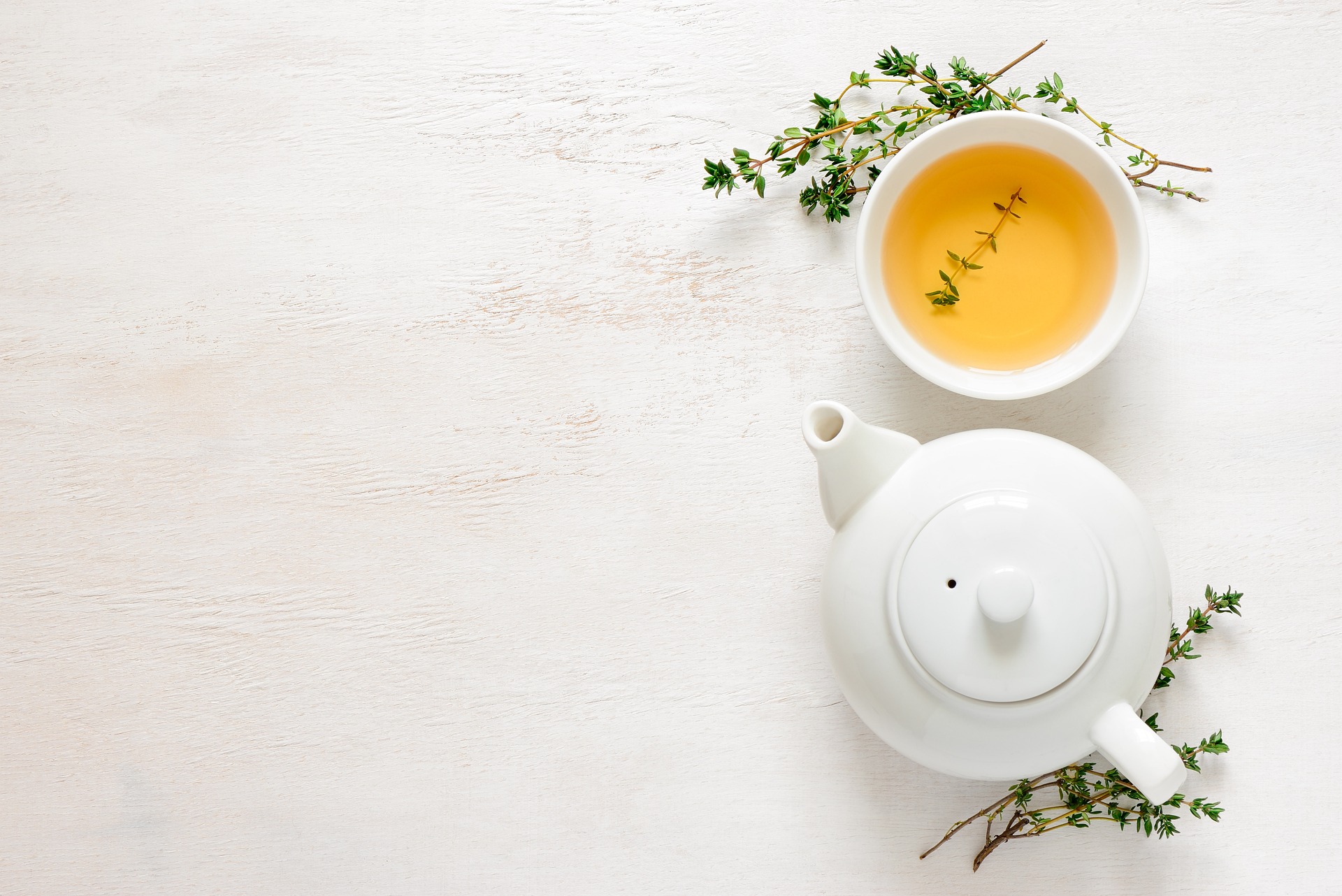
🐝 The Bee With the Golden Mission 🌼🐝
🐝A follow-up story that buzz from the Ecology chapter in the Biology Album. 🌸✨ It invites children to explore the hidden work of bees — how their tiny visits to flowers make the growth of fruits and seeds possible. 🍯🌾 As bees sip nectar and carry pollen, they form a living bridge between plants, helping entire ecosystems thrive. This story reveals the invisible interdependence between pollinators and flowering plants, showing how specific plants depend on bees alone. 🌿🕸️ It opens the door to further explorations of plant adaptations, food webs, and mutualistic relationships in nature, sparking wonder: What other plants can only grow with the help of a bee? How many kinds of bees live in our country? 🐝💭
BIOLOGY STORIES
5/20/20253 min read
I’ve got fuzzy socks and tiny wings,
I zig, I zag, I do wild things.
I taste each flower like it’s a treat,
Then fly back home with pollen feet! 🧦🐝🌸
Who am I? 😄
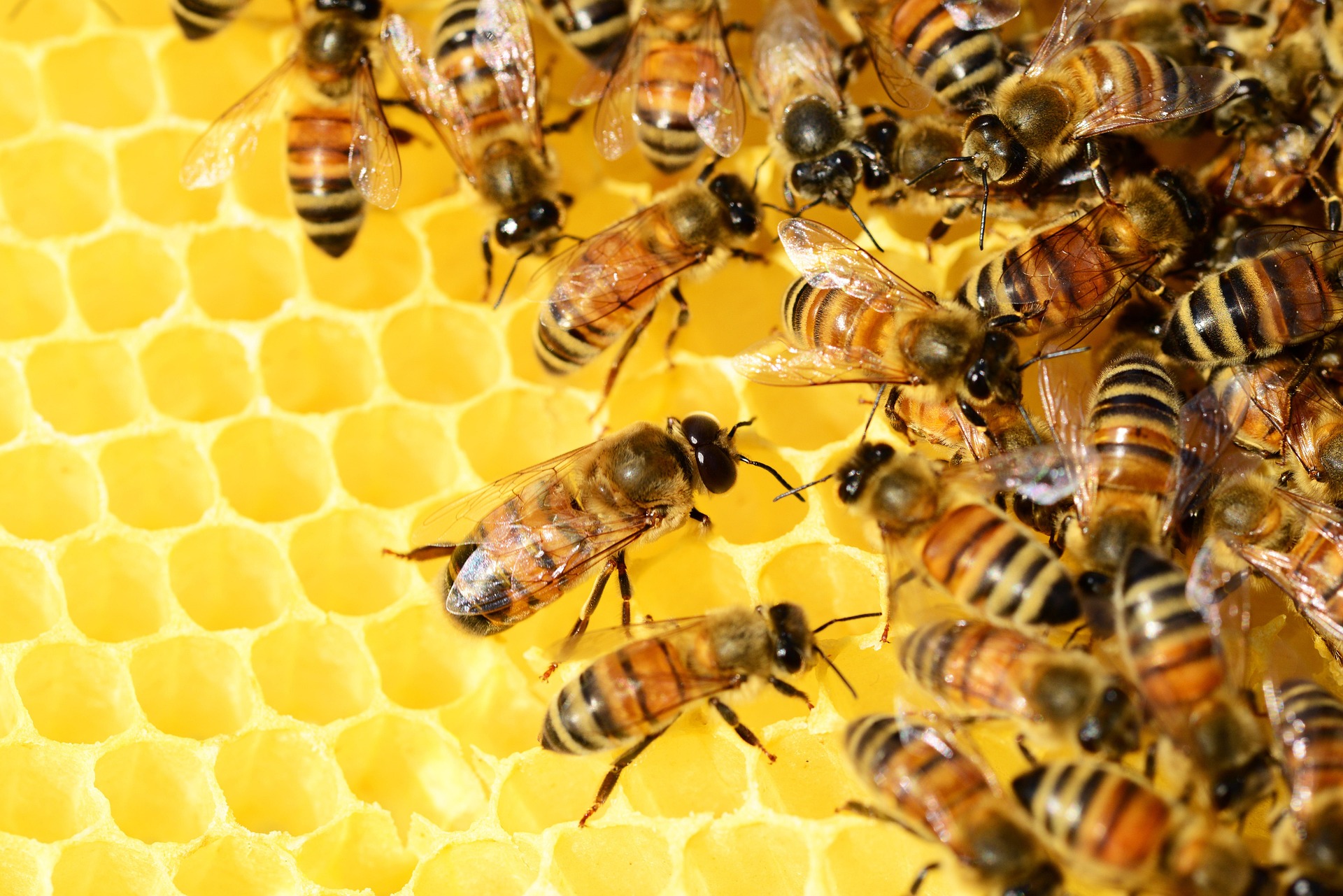
It’s a bee — small, fuzzy, and shining like it’s dipped in sunlight. ☀️🐝Bees have been buzzing around Earth for a very long time — far longer than humans, dogs, or even flowers with petals!
They evolved around 120 million years ago, during the time of the dinosaurs 🦖🌺. That’s when the very first flowering plants began to appear. And bees co-evolved with them — insects and flowers inventing pollination together.
So every time you see a bee on a bloom, you’re watching a friendship that has lasted over 100 million years. A mutualism so ancient, it helped shape the world we live in today. 🌍💛
But this little insect isn’t just flying for fun. She’s on a mission — one of the most important missions on Earth. A bee visits flowers not just for their beauty, but for their nectar 🍯 — 👏Nec-tar👏 — the drink of the gods, and her favourite one!
She drinks the nectar to feed herself and her sisters. And while she sips, something magical happens: pollen sticks to her body — golden grains from deep inside the flower. 🌼🌾
She zips away to the next bloom, and unknowingly leaves some of that pollen behind. That tiny delivery is called pollination — the secret handshake between plant and insect. Without it, many plants couldn’t make seeds or fruits.
No apples. No strawberries. No sunflowers. 🌻🍓🍎 Some flowers? They depend entirely on bees — no other pollinator will do.🐝🌸 Their blossoms are shaped just right for bee bodies, and their pollen needs a special kind of vibration called buzz pollination — a hum made by the bee’s flight muscles that shakes the pollen free like a salt shaker. 🧂🌀 Tomatoes,🍅 blueberries 🫐 , and almond blossoms wait for the honeybee’s gentle visit. Without bees, these plants would simply wait… and never make fruit.
And here’s a funny thing: bees leave messages with their feet! 🐾 When they land on a flower, they leave a scent that says “Already visited!” It’s like they’re writing invisible sticky notes to each other across the garden.
And if they find a big patch of blooms, they fly home and dance about it — a figure-eight movement called the waggle dance. 💃That’s how they tell the others: “The flowers are this far, in that direction — go!” No words. No maps. Just rhythm, memory, and sunlight.🗺️
And speaking of sunlight — bees don’t get lost. Even on cloudy days, they use the position of the sun to find their way. 🌞🧭 They see the world in ultraviolet — a color we can’t even imagine. To bees, some flowers look like glowing runways, with landing patterns that say, “This way to nectar!” 🛬🌈
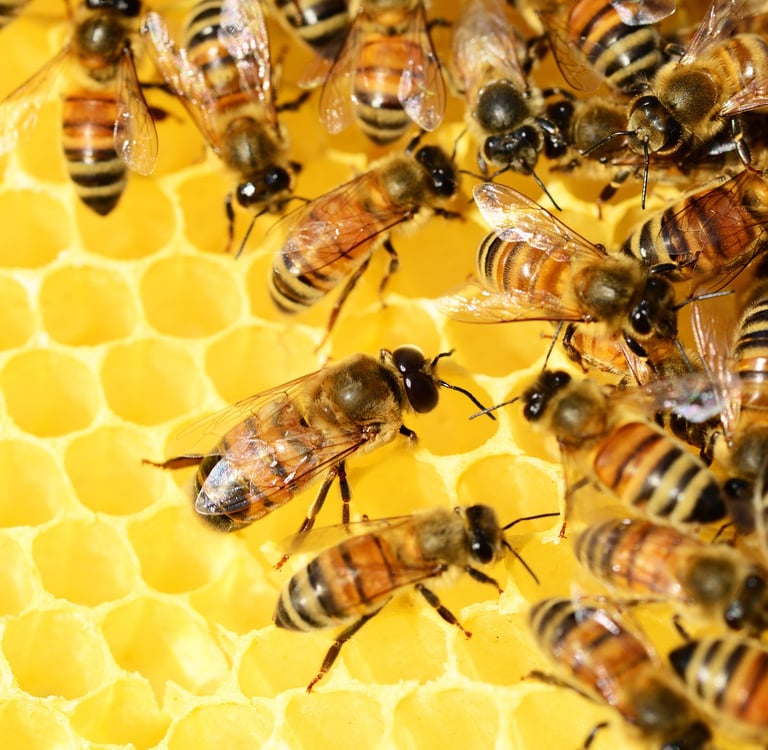
At her home, the hive , she becomes a builder. She makes wax with her body and shapes it into perfect hexagons — 👏Hex-a-gon👏 — from Greek hexa, “six.” Each honeycomb cell is six-sided and fits without a gap — the most efficient shape in nature. Architects study what bees do naturally. 📐🏗️
Her work is wild. It is wise. It is ancient. And when she’s tired? Sometimes, she curls up in a flower and sleeps — little legs clinging to a petal like a blanket. 🌸😴
The bee doesn’t wear a crown. But she is a queen in her work. 👑
There isn’t just one kind of bee. There are over 20,000 species of bees in the world! 🌍🐝 Some live in hives. Some live alone. Some are fuzzy like flying pom-poms, and some are shiny like beetles. 🪩 There are bees that are blue, green, even metallic purple.
There are bees that don’t make honey at all — but still pollinate plants, just by brushing past them on the way to drink.
I wonder… how many kinds of bees live in our country? Are there any that nest underground or in trees nearby? Whst does it mean the round dance if the waggle dance mean big patch of blooms ahead ?🌸
With Montessori joy,
Vanina 😊