
🌸 The Flower Shape Parade 🌺 Forms of Sympetalous Flowers 🌼
🌸 A follow-up story that branches from The Flower Chapter in the Biology Album. 🌺✨ It invites children to look beyond naming the flower parts and discover how the corolla, the flower’s “little crown,” does the work of calling, advertising, and inviting pollinators through colour, fragrance, nectar, and shape. 🌸🐝 After children have dissected flowers, named the parts, explored flower parts, noticed symmetry, and heard how flowers cooperate with insects, animals, and even the wind, The Flower Shape Parade opens the door to even deeper flower-pllinator explorations. Sympetalous flowers are flowers with petals that are fused, or “holding hands,” becoming tubes, funnels, bells, urns, trays, lips, tongues, wheels, and helmets. 🌺🔔🏺👄🛞 These shapes are not just beautiful forms to classify; they are clues to invisible relationships. A tubular flower may invite a long tongue, a labiate flower like the snapdragon may require a strong bee to open its “locked door,” a campanulate flower may shelter a visitor like a little bell-room, and a galeate flower may guide the pollinator beneath its tiny helmet. 🐝🔐 This story connects with the chapter’s work on adaptations of flowers to ensure pollination, the story of flowering plants and their ancient cooperation with insects, the variations of stamens as pollination strategies, and the later movement into fruit and seed, where successful pollination continues the life of the plant. 🌱🍓 It sparks wonder: “What does this flower shape remind us of?” “Who could enter this flower?” “Is the nectar hidden or easy to reach?” “Could the shape tell us something about the pollinator?”💭
BIOLOGY STORIES
5/7/20266 min read
You have already discovered that people named every part of the flower. You have seen the sepals, the petals, the stamens, and the pistil. You have seen pollen, and you have heard stories of how pollinators such as bees, butterflies, moths, birds, ants, the wind, and many other visitors help plants continue their life cycle.
But today, we are going to explore flowers with new lens and investigate their corollas. Some flowers have petals that stand apart, like children standing in a circle. But some flowers have petals that are joined together. It is almost as if the petals are holding hands. 🌸🤝🌸 These flowers are called sympetalous flowers.
Let’s clap that new word: sym-pet-al-ous 👏 👏 👏 👏 The prefix sym comes from Greek and means together. Petal is a root that comes from Greek word that means the coloured leaf-like part of the flower. So sympetalous means: petals together.
And when petals join together, they can make many different shapes. Today, we will explore those shapes closely. The flower’s shape is not just decoration. Sometimes the shape is designed in such a way that only certain pollinators can reach the sweet nectar. Shape can be part of the flower’s secret invitation. 🐝🦋🌺🌸✉️
A wide, open flower may say, “Many visitors can come here.” But a flower with a long, narrow tube may say, “Only a visitor with long proboscis can reach my hidden reward.” 🐝🦋
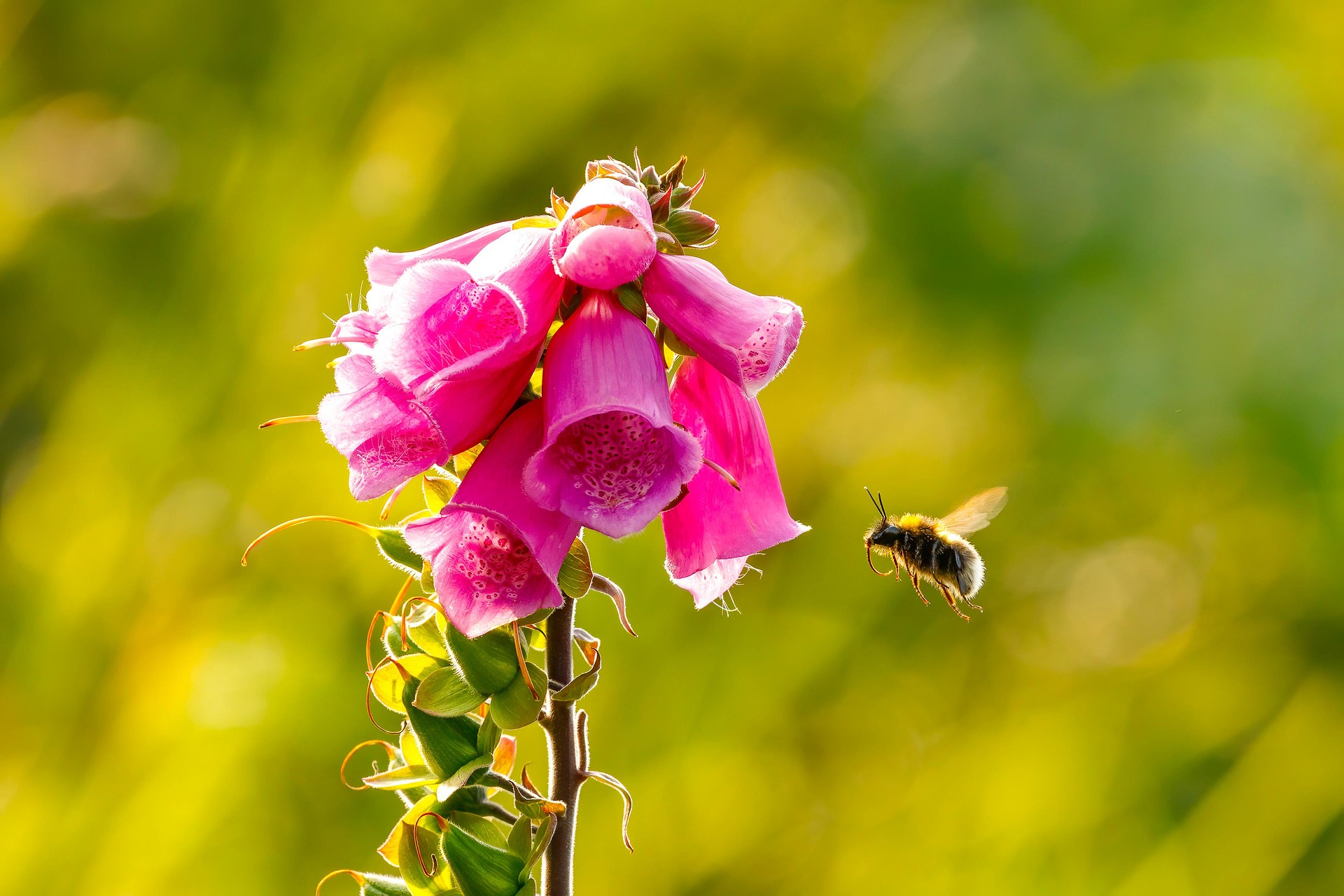
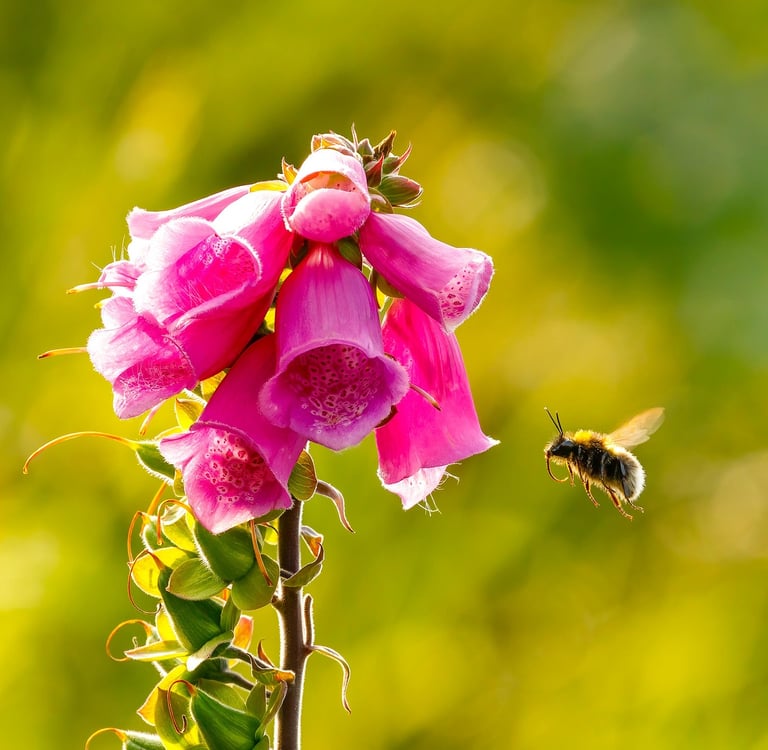
Here I have a foxglove which is shaped like a tube. 🌺 This is called tubular. ( write on a slip the name ) Clap it: tu-bu-lar 👏 👏 👏 Tubular comes from the Latin word tubus, meaning tube or pipe. A tubular flower has petals joined into a long, narrow tube. A pollinator may need to crawl inside this little tunnel to reach the nectar. Can you see the speckles inside the flower? They look almost like tiny stepping stones or secret markings, guiding the visitor deeper toward the center. 🐝✨ The foxglove seems to say: “Come in through my purple doorway, follow the spotted path, and find the sweetness hidden inside.”
Next comes a morning glory shaped like a funnel. 🌸 The flower opens wide like a little trumpet at the top, then narrows toward the base. It is like a landing invitation: “Come to my wide purple doorway, follow the glowing path inward, and discover what is hidden at the center.”🦋🎺 This is called funnelform. ( write on a slip the name ) Clap it: fun-nel-form 👏 👏 👏 Funnel means a wide opening that narrows down, and form means shape. So funnelform means funnel-shaped.
Then look how the bluebell is shaped, like a bell. 🔔🌸 Flowers with corollas like bels are called campanulate.( write on a slip the name ) Clap it: cam-pan-u-late 👏 👏 👏 👏 Campanulate comes from the Latin word campana, meaning bell. These flowers hang or open like tiny bells. Some insects may climb inside, as if entering a little flower room. The bell shape may shelter the pollen and nectar from rain or wind. 🔔🐝 The bluebell seems to say: “I am a little hanging bell. Come close, look underneath, and discover what I am protecting inside.”
And what the corolla of the grape hyacinth remind you of? Look closely at each tiny purple flower. It is rounded and swollen, but the opening is small and narrow — like a little urn, vase, or jar. 🏺🌸 This is called urceolate. ( write on a slip the name ) Clap it: ur-ce-o-late 👏 👏 👏 👏 Urceolate comes from the Latin word urceolus, meaning a little pitcher, urn, or jar.A pollinator may need to reach carefully into the small opening to find what is hidden inside. Some bees can shake the flower and release pollen.The flower does not open wide like the morning glory. It keeps its sweetness tucked away in a tiny purple jar. 🐝🍯The grape hyacinth seems to whisper: “Can you solve my little jar puzzle? Come close, find the narrow doorway, and discover the sweetness hidden inside.” 🏺🐝
Here I have another sympetalous flower, the primose . Look carefully at the corolla. It has a narrow tube below, and then suddenly it opens into a flat, spreading face, almost like a little plate or tray. 🌼 This form is called salverform. ( write on a slip the name ) Clap it: sal-ver-form 👏 👏 👏 A salver is a flat tray used for serving. So salverform means shaped like a tray, often with a long tube below and a flat spreading top. The primrose gives pollinators a bright, open face, almost like a landing place, but the nectar is not sitting on the tray. It is hidden deeper down in the narrow tube. A bee, butterfly, or moth may visit, but only the one that can reach down into the tube will find the sweet reward. 🐝🦋🍯The primrose seems to say: “Here is my bright golden tray. Land here, look closely, and see if you can reach the sweetness hidden below.” 🌼✨
Then comes a dead-nettle with flowers shaped like lips. 👄🌸 This is called labiate. ( write on a slip the name ) Clap it: la-bi-ate 👏 👏 👏 Labiate comes from the Latin word labium, meaning lip. These flowers look as if they have an upper lip and a lower lip. Some are like little mouths, open like the dead-nettle or fully closed like the snapdragon. Only few pollinators know how to open that locked door. Look at that clever bumble bee, diving in for a little sweetness. The flower with labiate corolla seems to say, “Only the smartest visitor can open me.” 🔐🐝
But when you look at the corolla of the dandelion , you notice a fluffy head made of many tiny flowers together, and many of those little flowers have tongue-shaped corollas. 👅🌼 👅🌼 This type of sympetalous flower is called ligulate. ( write on a slip the name ) Clap it: lig-u-late 👏 👏 👏 Ligulate comes from the Latin word ligula, meaning little tongue. This flower shape helps make a bright sign for pollinators: “Look here! Food is here, all inclusive buffee for everyone!” 🌼🐝
And the forget-me-not holds a special story. At first glance, the petals may not look sympetalous, but when you look closely, you can see that they are joined together and spread out like a tiny wheel. 🛞🌸 This form is called rotate. ( write on a slip the name ) Clap it: ro-tate 👏 👏 Rotate comes from the Latin word rota, meaning wheel. The corolla spreads out like a little wheel, often with a very short tube on the bottom. The open face may make the flower easy to see and easy to visit. It says, “I am open. Come and see what I have inside” 🛞🐝 But the forget-me-not has another secret. Look at the tiny center of the flower. It can act almost like a little traffic light for pollinators. 🚦🌼 When the flower is ready and still has nectar to offer, the center shines bright yellow, as if it is saying, “Come here! I have something for you.” Later, when the flower has already been visited and its work is done, the center fades toward white, as if it is gently saying, “Thank you, my work is finished now. Visit another flower that still has a gift to share.” 🌸🐝✨
Last in the sympetalous parade comes a flower shaped like a helmet or hood. ⛑️🌸 This is monkshood, and indeed, its corolla looks like a little hoodie. This shape of sympetalous flower is called galeate. ( write on a slip the name ) Clap it: ga-le-ate 👏 👏 👏 Galeate comes from the Latin word galea, meaning helmet. In a galeate flower, part of the flower forms a hood, helmet, or roof-like shape. This can protect the delicate parts of the flower and guide the pollinator into just the right place. It is as if the flower has built a tiny roof over its treasure. ⛑️🐝
So now we have met few examples of flowers with sympetalous corollas, and you can look at flowers with a new eye — the eye of the scientist. 🌸🐝🦋
The booklet from this nomenclature pouch can help us indentify the flowers we will ivestigate outside. 🌸🔍 Let’s go out and look carefully at the corollas of the flowers and wonder aloud...
Are the petals separate, or are they joined? If they are joined, what shape have they made? Is it tubular — like a tube 🌺? A campanulate — like a bell 🔔? A funnelform — like a funnel 🌸? A urceolate — like an urn 🏺? A salverform — like a tray with a tube 🍽️?A labiate — like lips 👄? A galeate — like a helmet ⛑️ ? A ligulate — like a tongue 👅 ? Who might be able to enter this flower? A rotate — like a wheel 🛞? Who might be the secret pollinator of this flower?
I wonder…
I wonder why some flowers hide their nectar deep inside a tube and who has such a long straw to reach? I wonder why some flowers open wide like a wheel and what are their pollinators?
I wonder why the snapdragon needs a strong visitor?
I wonder which flowers in our garden have petals that are shaped like urn?
With Montessori joy,
Vanina 😊