🌊 The Moon’s Secret Power - Playing With the Oceans and making Tides 🌊
This story links to the Chapter CREATION in the Geography Album , where we uncover the forces shaping the universe, the Earth, and its natural rhythms. 🌌🌍 This chapter introduces children to the fundamental laws of nature, like gravity and motion, and their role in creating celestial bodies and governing their interactions.From these foundational ideas, and the Great Lesson “God with No Hands,” we branch into the story of the tides 🌊, a real-life example of how the Moon 🌕 and Sun 🌞 work together with gravity to shape life on Earth. The rhythmic rise and fall of the ocean tides are a cosmic dance, driven by the gravitational pull of the Moon and the Sun, and influenced by Earth’s rotation. 🌟 This story sparks wonder and invites further exploration into Earth’s celestial relationships and their impacts on life. 🌊✨
GEOGRAPHY STORIES
1/10/20254 min read
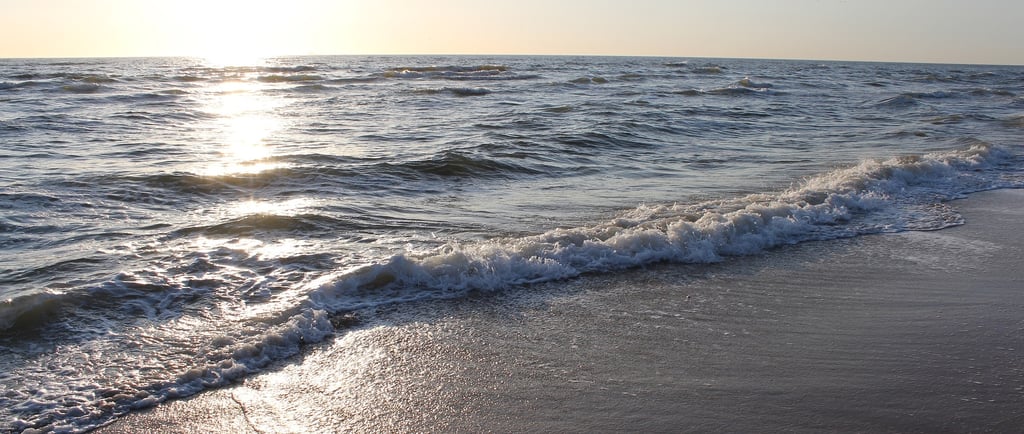
🌊 Remember the last time you were on the beach? Did you notice how sometimes the waves creep closer to the shore, wiping out sandcastles and making the beach smaller and smaller? And other times, the beach seems to stretch out, leaving behind plenty of space to play, along with seashells, seaweed, and even some sea stars? 🏖️ But what makes this happen? It’s the tide! (👏🏻 Tide 👏🏻) The word tide comes from the Old English word tid, meaning “time.” It’s like the ocean is keeping time, rising and falling like the ticking of a clock! 🕰️ 🌕✨
✨ A long time ago, people noticed same thing about the ocean 🌊. The water would rise and fall at different times of the day, like a magical rhythm. What could be causing this mysterious movement? The answer was above them all along—the Moon! 🌌🌕
🌍✨We discovered that The Moon is like Earth’s daughter, connected by an invisible force called gravity. (👏🏻 Gra 👏🏻 vi 👏🏻 ty 👏🏻) Gravity comes from the Latin word gravitas, meaning “heaviness” or “weight.” It’s the same invisible force that pulls you back every time you jump 🌍, makes apples fall from trees instead of floating freely in the air 🍎, and keeps the Earth in a graceful dance around the Sun ☀️. But guess what? The Moon has gravity too—just a little compared to Earth’s gravity. And guess what? The Moon’s gravity plays tricks with the Earth’s oceans! 💧
🌍🌕 When the Earth was born, it began to dance, spinning happily like a top around its axis. ( Spin around yourself counterclockwise as you demonstrate 🌎💃) Meanwhile, the Moon’s gravity is tugging on the water from Earth as if it’s saying, “Come closer, come closer!” So, the water on the side of Earth closest to the Moon stretches into a big bump of water—that’s called high tide! 🌊✨ 🌊✨

But wait! The Moon’s gravity isn’t strong enough to pull all of Earth’s water directly. This makes the water on the far side of Earth lag behind, creating another high tide there. Can you imagine? Two high tides happen at the same time—one where the Moon is pulling and another where the water is left behind, like in 🌟 this picture. 🌟
🌞🌕 But what happens when the Sun gets involved?! 🌞🌕 Welcome to the The Tug-of-War Ocean Dance 🌊✨
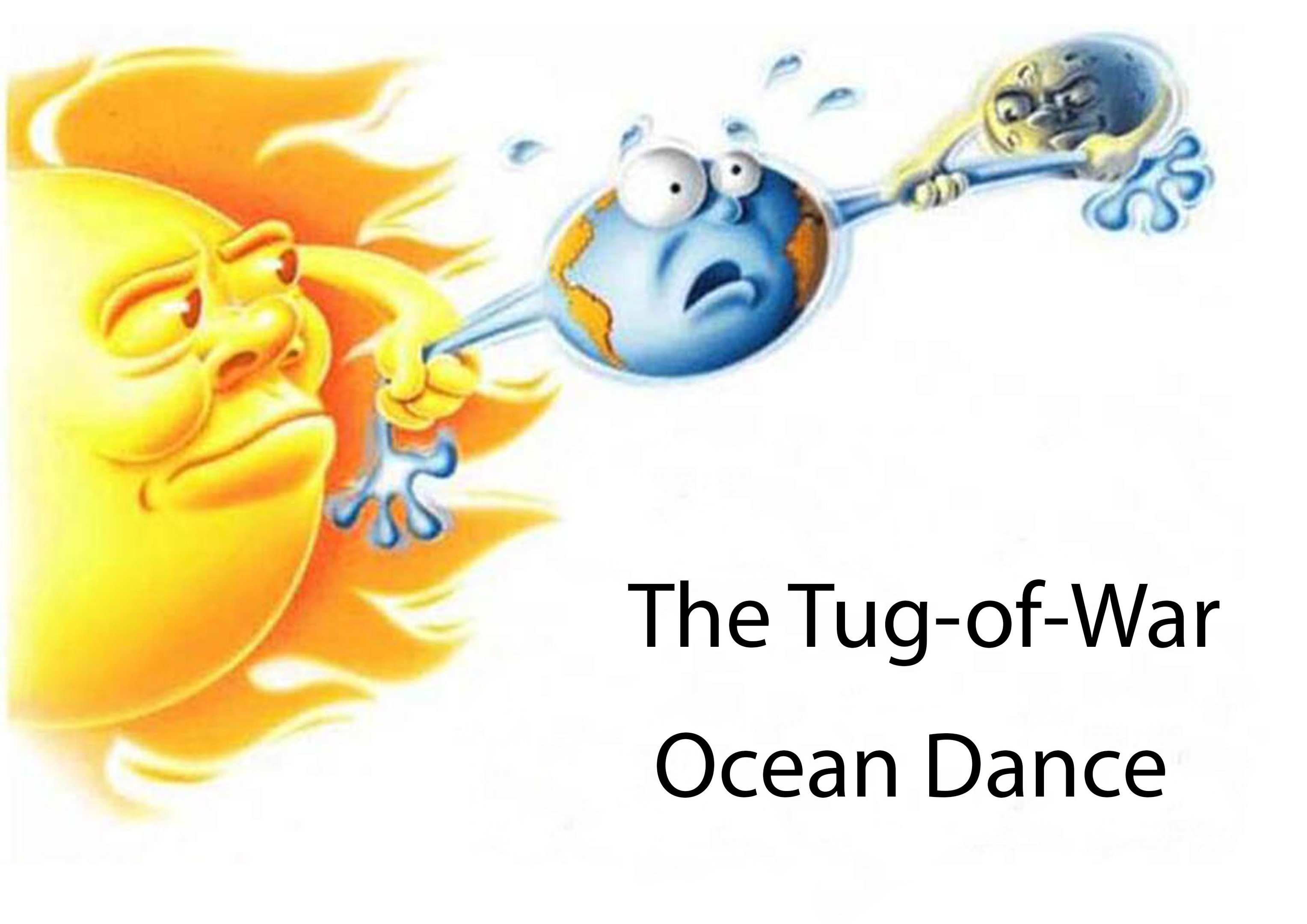
Imagine the Earth 🌍 is at the center of a big playground, with the Sun 🌞 on one side and the Moon 🌕 on the other. They’re playing a gentle game of tug-of-war with the oceans! Now, let’s see what happens when they pull together or at different angles. 🎯✨
🌟When the Sun and Moon are Best Friends 🌞+🌕
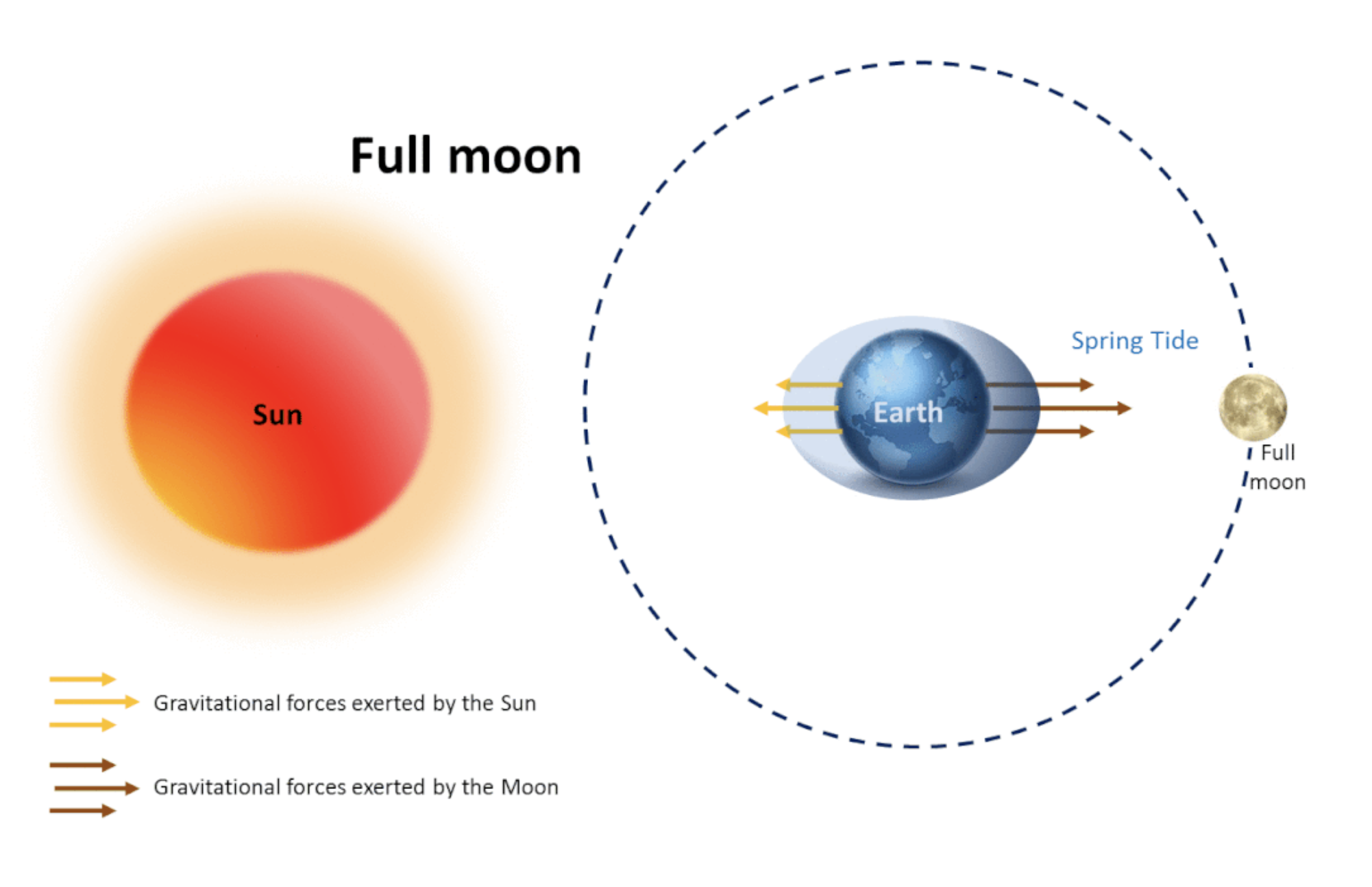
The Sun аnd Moon stand in a line with Earth in the middle, like teammates holding the same rope. Imagine the Sun saying, “Let’s pull together! 1,2,3, Pull!” 🌞🌕💪 Their combined pull (gravity) tugs on the oceans, creating super big high tides on both sides of Earth. These are called spring tides! (👏🏻 Spring 👏🏻 Tides 👏🏻)
The word “spring” here doesn’t mean the season 🌸. It comes from the Old English word springan, meaning “to leap,” because these tides leap higher! 🌊✨ This happens during the Full Moon 🌕 and New Moon 🌑 when the Sun, Earth, and Moon are lined up like the ultimate tug-of-war team! 🎉🌍
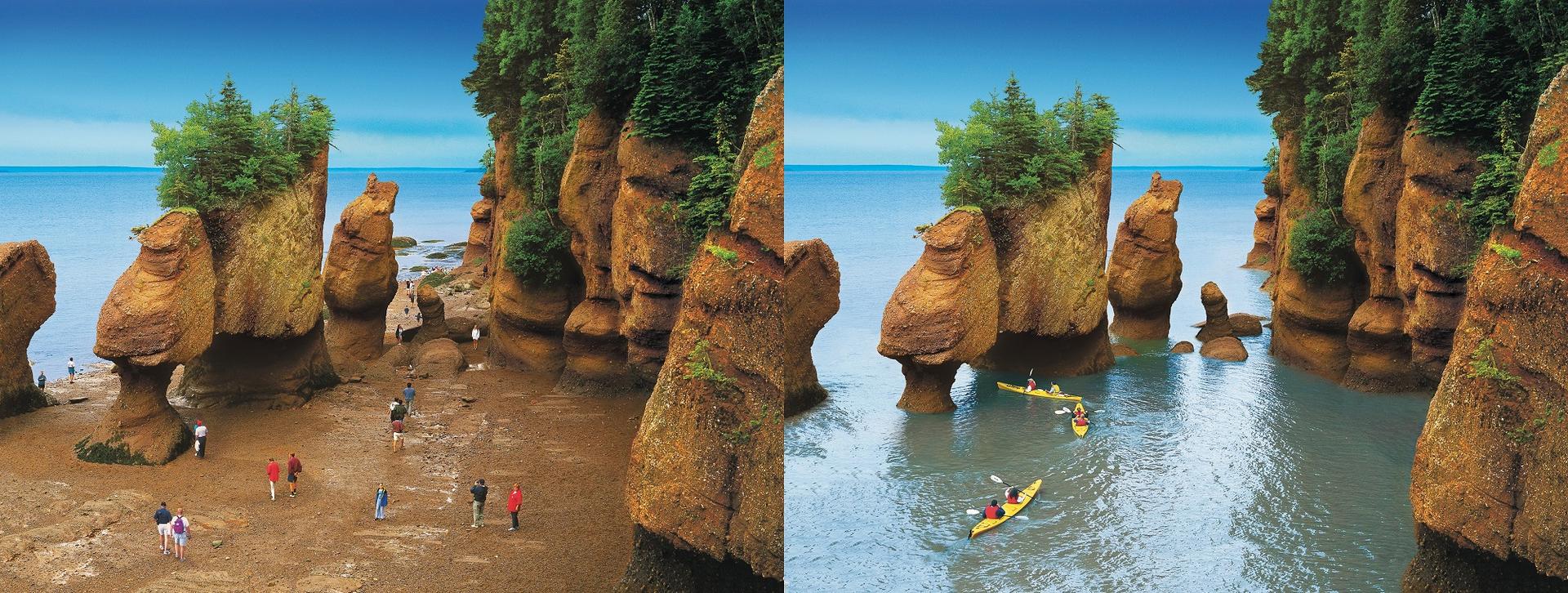
Look at this photo! 🌊✨ During spring tides, the low tides pull the water way back, revealing the ocean floor. It’s like the sea takes a big step back to show us its secrets. 🐚🐟 Imagine walking on the ocean floor, exploring tide pools, and meeting little creatures that call it home. 🌟
Now let's see When the Sun and Moon are Playing Tug-of-War at an Angle 🌞↔️🌓Now imagine the Sun saying, “I’ll pull this way,” 🌞 and the Moon replying, “I’ll pull that way.” 🌕 They’re at a right angle (90 degrees) to each other, like two friends pulling ropes in different directions during a game.
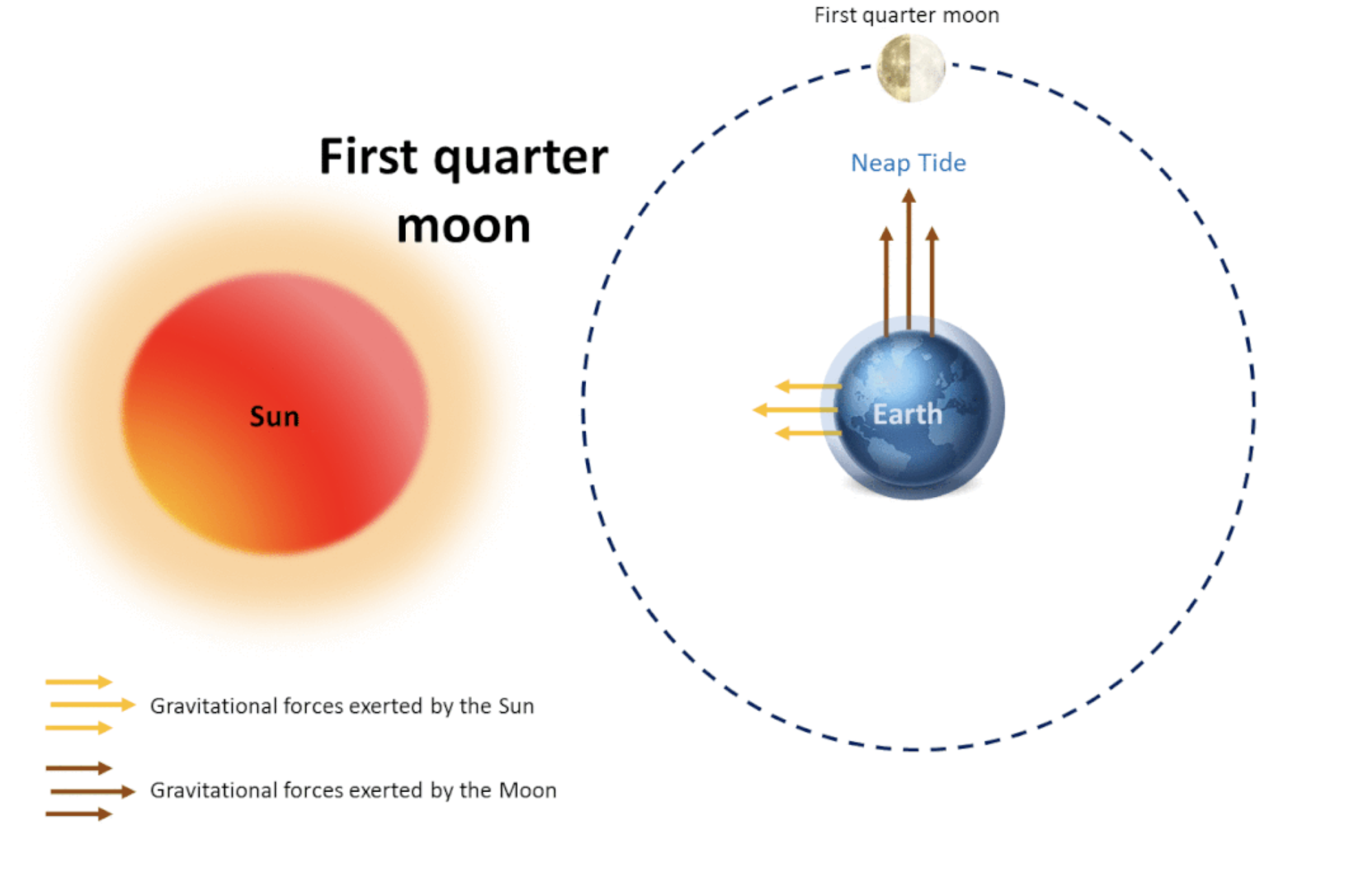
The ocean doesn’t know who to listen to! 🌊 The water forms tiny, gentler bulges—these are neap tides! (👏🏻 Neap 👏🏻 Tide 👏🏻) The word neap comes from the Old English word nep, meaning “small.” 🌟 It’s like the ocean is taking a little nap! 🌊💤
🌎 And so, as the Earth spins, this tug-of-war creates a rhythm: high tide, low tide, high tide, low tide. It’s like the ocean is dancing to the Moon’s gravity! 🌕✨We can see the action on repeat on this Diagram.

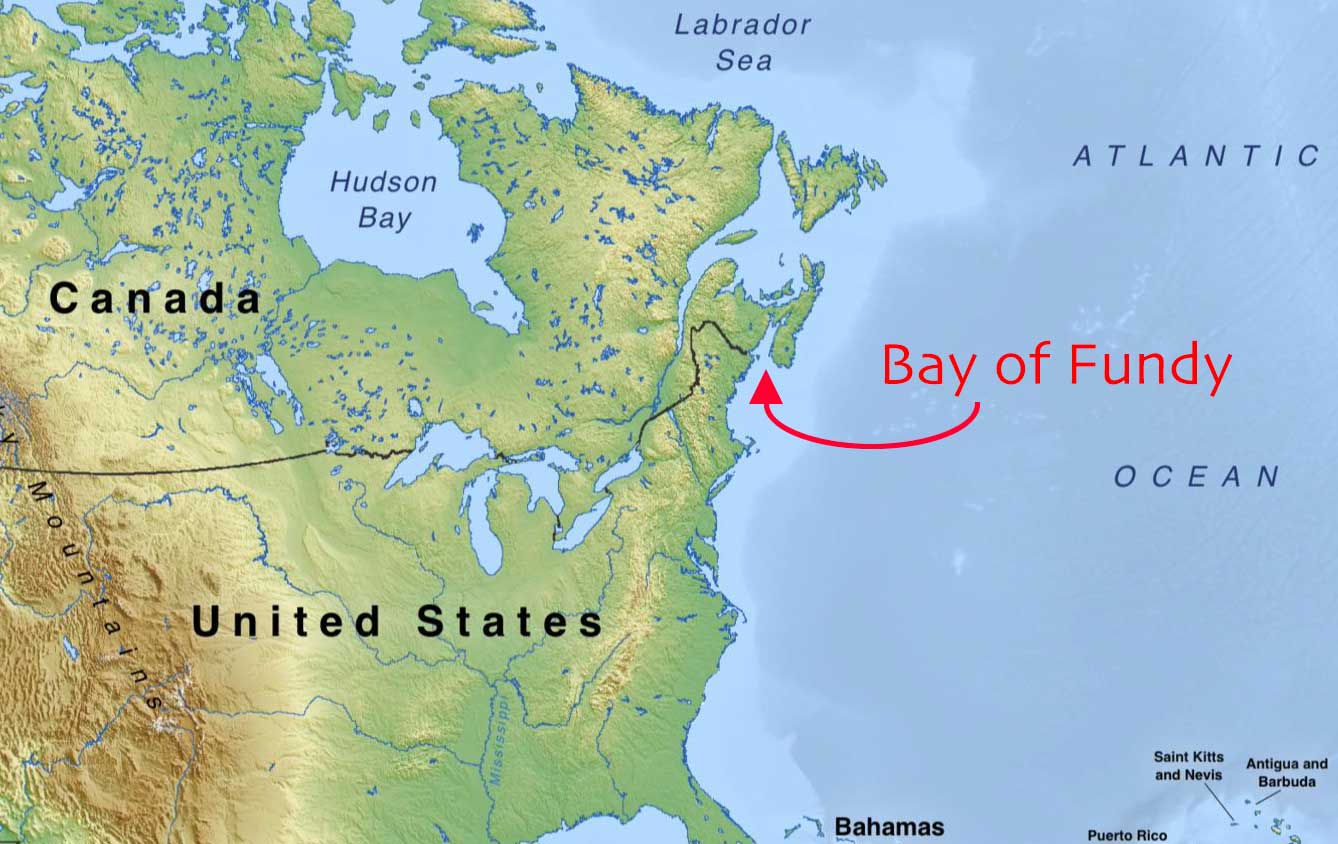
There’s a place where you can see some of the most dramatic tides in the world? 🌊✨ It’s called the Bay of Fundy, in Canada! Look at this photo—on the left, the water is high, covering most of the land 🌕. On the right, it’s low tide, and you can see how much of the ocean pulls back! Just imagine finding the harbor drained like that—what would you think? Did someone drink the ocean? Where did all the water go? The Bay of Fundy has tides so big they can rise as high as a four-story building! 🏖️🌊
We can re-create the Ocean Dance and the Tug of War ocean dance.
By using a hula hoop as the Earth , with one child as the Moon pulling gently and another as the Sun pulling from different spots. Let’s see what happens when they pull together, like during spring tides, or at an angle, like during neap tides?
🌊 I wonder...❓What do you think? What would happen to the tides if there was no Moon at all? Or if the Moon moved closer to Earth? 🌕✨ 🌊💡
You can also re-create this experiment for independent explorations of the tides.
What You’ll Need:
• A bucket filled halfway with water (this represents Earth’s oceans 🌊).
• A small ball or globe (to represent Earth 🌍) placed in the center of the bucket.
• Two ropes tied to opposite sides of the bucket and one 90 degrees angle from the rope with the moon (one for the Moon 🌕 and two for the Sun - one for the spring tides and one for the neap tides🌞).
With Montessori joy,
Vanina 😊