🌸 The Peony and the Ant Army 🐜
🌸 A follow-up story that branches from Chapter The Flower in the Biology Album — and reaches quietly into Chapter Zoology – Introducing the Animals. 🐜✨ It invites children to discover the fascinating mutualistic relationship between the peony and the ants—how this flower, long before it even opens, offers sweet droplets of nectar 🍬 to ants in exchange for their loyal protection 🛡️. As the peony blooms in a spectacular display of stamens and sometimes multiple pistils 🌼, a quiet agreement unfolds—not based on beauty alone, but on strategy, survival, and shared benefit. This story brings the function of the flower into vivid focus, while also introducing one of the most accessible examples of symbiosis in the animal kingdom 🤝. It gently invites wonder: “What secret partnerships might other flowers form to ensure their seeds survive?” 🌱💫
BIOLOGY STORIES
5/13/20252 min read
Peonies are superstars of May gardens — big, ruffled, fluffy blooms that almost look like scoops of strawberry ice cream 🍓🍦. But did you know these flowers are older than the pyramids in Egypt? 🏺⏳ Archaeologists have found peony roots in ancient Chinese tombs 🇨🇳, carefully wrapped like treasure in royal tombs that are at least 4,000 years old, possibly older. 🏯🌱🎁 Why?
🌿 Because the peony root (Paeonia officinalis) was once used as a powerful medicine! In ancient China and Greece, healers used the root to treat fevers 🌡️, headaches 🤕, and even nightmares 😴. In Greek legend, a student named Paeon learned how to heal the wounds of the gods ⚡. His teacher grew jealous 😠, but the king of those gods — Zeus, who they believed ruled the sky and made thunder — protected Paeon by turning him into a flower 🌸 — the peony. That’s why its scientific name is 👏 Pae-o-ni-a 👏— from Paeon, the mythical healer whose wisdom now blooms quietly in gardens around the world 🌍.
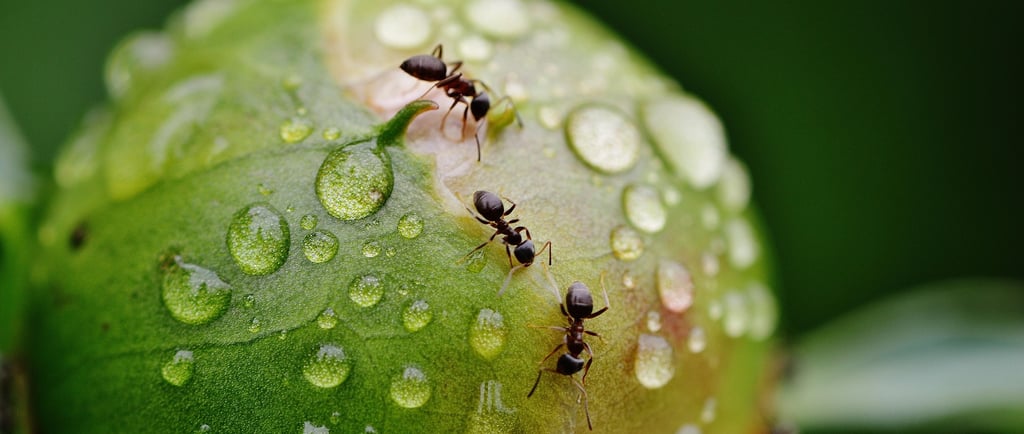
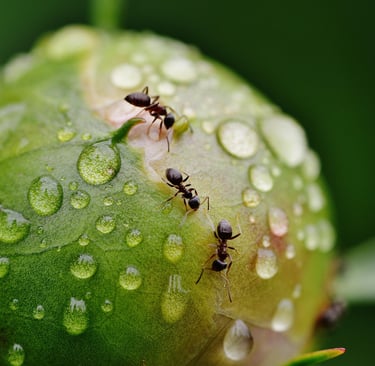
But this flower doesn’t just carry ancient legends — it carries out a clever plan 🧠🌸. Long before the petals unfold, the peony bud, round as a little sphere 🌕, begins to secrete nectar 🍬 — not deep inside like many flowers, but on the outside of its tightly curled form. 👏Nec-tar👏— from Greek néktar, “the drink of the gods” 🧉👑. That sweet drink brings visitors: ants 🐜. They love this drink of the gods! They are sugar addicted! 🍬 You’ll see them marching over the buds 🚶♂️, drinking the nectar, and guarding the flower from pests🛡️. The ants chase away hungry bugs 🐛 who might chew the petals before they even bloom.
This is not just an accident — it’s mutualism 🤝 — 👏 Mu-tu-al-ism 👏 — from Latin mutuus, meaning “shared.” But what do they share? The peony shares nectar 🍬 and the ants share protection, guarding the bud from insects that might harm it. Each one gives something the other needs. 🌸🐜 A partnership that helps them both survive. A silent deal is made — one that has worked for thousands of springs 🌼💫.
And then, one warm morning 🌞, the peony opens — petal by petal 🌸, like a curtain lifting on a stage 🎭. Inside is a hidden kingdom: a pistil — sometimes more than one! — rising like a mountain peaks 🏔️ at the center, surrounded by a bright explosion of stamens 💥 —dancing in the air, dusted with golden pollen. 🌾There may be dozens… even a hundred! 😮 It’s a pollen show 🌟 — a celebration of life and possibility.
But there’s more secrets that this late bloomer hides : peonies don’t shout with neon color. Instead, they speak with scent 👃. Their spicy-sweet perfume floats through the air, calling flies 🪰, beetles 🪲, and sometimes even bees 🐝. That’s called an olfactory adaptation— clap it: 👏Ol-fac-to-ry 👏 — from Latin olfactus, meaning “smell.” It’s nature’s invisible message: “Come closer… I have something for you.” 💌
Humans have listened, too 👂. In China, the peony became a symbol of honor, love, and wealth 💖💰. In medieval Europe, people carried dried seeds to protect children from nightmares 🧸. Healers used its roots to cool fevers, soothe pain, and calm the mind💓. Today, we still plant peonies in wedding bouquets 💍, memory gardens 🌳, and along winding fences — not just for their beauty, but because they carry something deeper: the wisdom of cooperation and survival.
I wonder… what other examples of mutualism you can find in the plant 🌿 or animal kingdom 🦓 — like oxpeckers riding on zebras or ants protecting a flower — where two living beings help each other survive and thrive together? 🤝💚
With Montessori joy,
Vanina 😊