✨ The Secret Flowers of Hazel 🌸
🌿 A follow-up story that connects The Flower chapter in the Biology Album. ✨ It invites children to begin with something they can really notice — the hazel’s fuzzy catkins wobbling and dancing in the cold air 🐱🌬️ — and then step quietly into the secret world of flowers, where a catkin is not just one flower, but a whole hanging spike crowded with tiny flowers. Children are invited to investigate what kind of flower this masterpiece really is. The story fills them with admiration for how clever nature can be, and helps them sense the relationship and interdependency hidden within pollination 💛✨. Hazel also connects beautifully with the earlier work on incomplete flowers, inviting children to look further and wonder 🔎🌿: what other trees are wearing hidden flowers?
BIOLOGY STORIES
4/7/20262 min read
In spring, when the days grow longer in the North Hemisphere, the sun shines brighter, and nature begins to wake, we can see flowers bursting open everywhere. 🌞🌷
On a walk, we might spot blossoms in bright purple, glowing yellow, and snowy white. Some flowers open wide like shining crowns, almost calling, “Look at me!” 👑✨ Others bloom more quietly, tucked away like they are a little shy and do not want to steal all the attention. 🤫🌼
Some flowers are complete flowers. That means they have all their parts: sepals, petals, stamens, and pistil. 🌸 And some flowers are incomplete flowers — they are missing one of those parts. They do not follow the usual flower pattern, and that makes them especially interesting. 🔎✨
Today I want to tell you the story of one incomplete flower growing on a tree you may have seen before. You might even have eaten its fruit in late spring — in fact, it is one of the most important ingredients in Nutella! 🌰😋 Can you guess which tree I’m thinking of?
Here I brought a branch from hazel tree. 🌿 When we look at hazel in spring, you may not see the leaves coming first. Its flowers bloom before the leaves grow. You might even walk right past them and not even notice the flowers at all. 👀🌬️
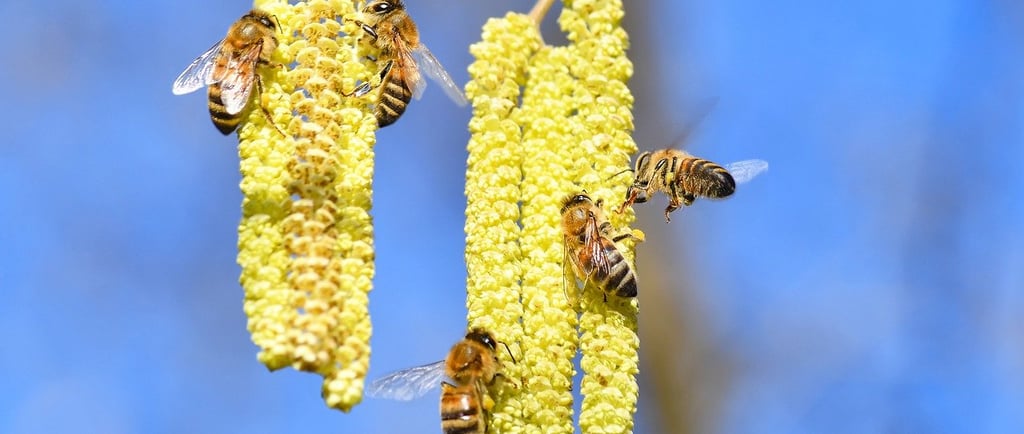
That is because hazel does not make the kind of flowers that shout for attention. No giant petals. No silky perfume. No bright blossom waving from the branch. 🌸🙅Hazel does something far more mysterious. Can you see this little fuzzy tassels from its branches — soft, wiggly, golden things that bob and bounce in the breeze. They look a bit like tiny tails. These flowers are called catkins. 🐾 The word catkin comes from a word meaning “little kitten,” because they look so much like kitten tails hanging from the tree. 😺🌿
And when the wind blows — oh! — the hazel catkins begin to dance. They sway. They jiggle. They flutter. They tremble. 💨💛 And some people with pollen allergies begin to sneeze.
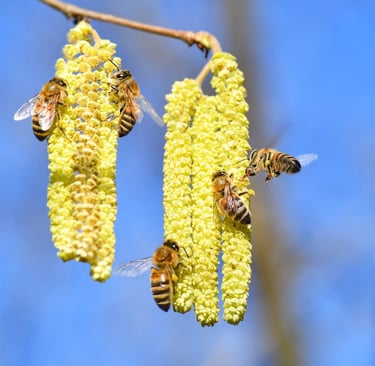
These catkins are the male flowers, covered with stamens and polen. They huddle together in a busy little crowd, dangling from the branch and trembling in the breeze. When they are ready, they shake loose their pollen, spilling tiny golden grains into the air where they whirl and drift away on the wind like secret messages. 🌬️✨ And sometimes bees visit them too — buzzing, landing, crawling, and gathering pollen from this pollen tassels, as if they have discovered a hidden spring feast. 🐝💛
And this is how the hazel begins its quiet spring work. 🌿 🌿 About 12,000 years ago, hunter-gathereres were already gathering hazelnuts to eat, and archaeologists still find old hazelnut shells in the ground today.🌰In Irish stories, hazel became a tree of wisdom and wonder. 📖✨People told stories of nine hazel trees growing beside a magical well, dropping their nuts into the water, where a salmon ate them and became full of knowledge. 🐟✨
The story of this famous nut begins so quietly — with a hidden female flower, a dancing catkin, and the wind carrying pollen from one to the other. 💨💛
💭 I wonder…what does the female flower of the hazel look like? ❤️What other trees make catkins in spring? 🌳 …how are hazel catkins the same as other catkins, and how are they different? ✨Hazel does not keep its gifts just for people, either — its nuts become important food for many forest animals. Which animals are waiting for hazelnuts to help them through the fall and the long winter? 🌰❄️
With Montessori joy,
Vanina 😊