🔐 The Secret Lover of the Snapdragon 🌸🐝
🐝 A follow-up story that connects to Chapter The Flower in the Biology Album. 🌸✨ The Secret Lover of the Snapdragon invites children to step into a hidden world of flower shapes, pollinator strength, and nature’s quiet matchmaking. In this story, the snapdragon is not just a flower — it is a gatekeeper. With lips tightly sealed, it guards its nectar deep inside, opening only for one visitor strong enough to push them apart: the bumblebee. 💪🌼 This story introduces the concept of mechanical adaptation — how form and function intertwine — and introduces the bilabiate corolla, a two-lipped flower structure evolved to work in perfect harmony with a specific pollinator. 🌿💛🔍✨🌼🔐 Children are invited to observe: Which flowers are open to all? Which ones have hidden doors? It opens the way to classifying flowers by corolla type, and matching them to the pollinators best equipped to reach their nectar. 🦋🪲🌼🧠
BIOLOGY STORIES
5/21/20252 min read
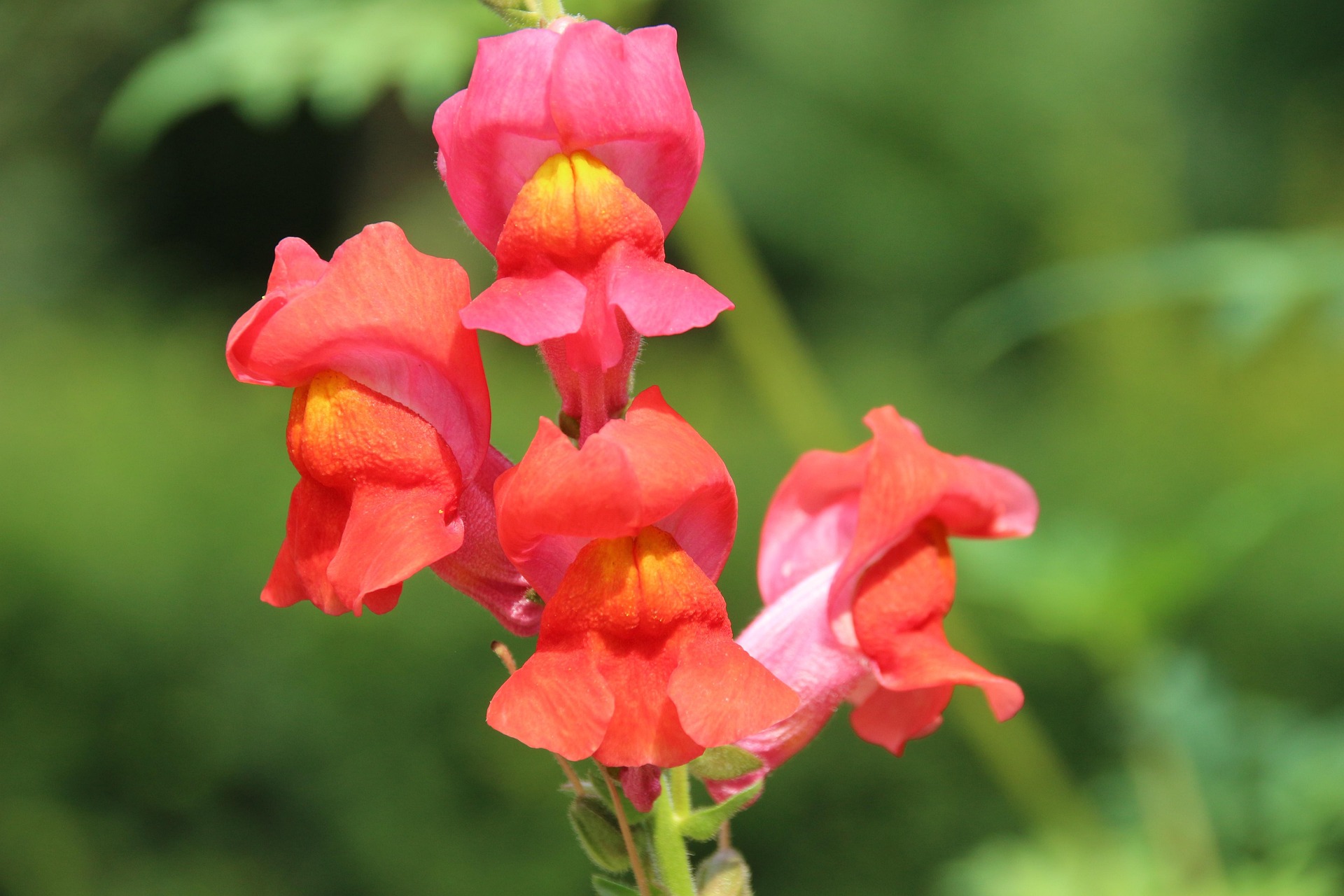
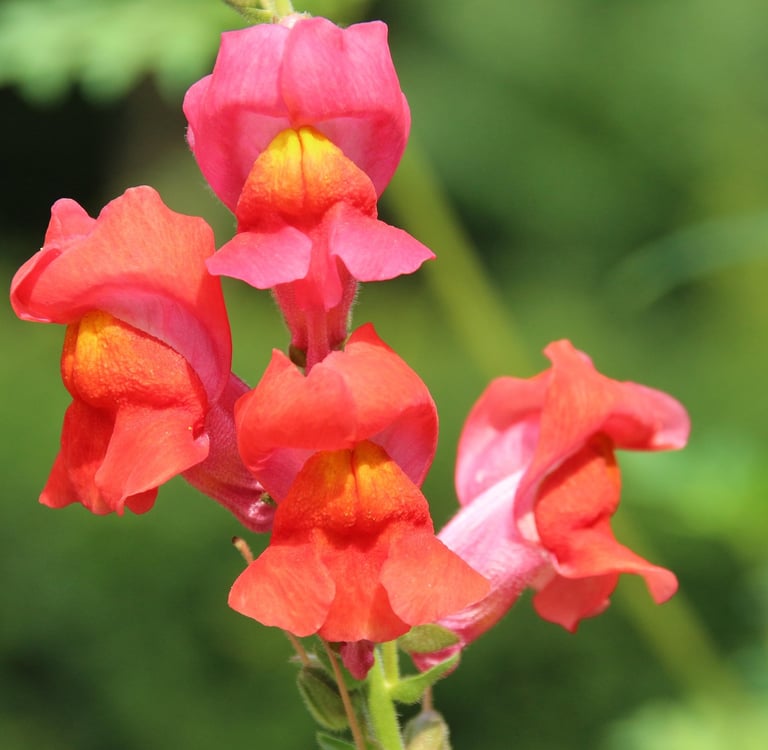
Look at this flower. 👀🌸 Its petals are soft, velvety, and closed—like lips pressed gently shut 👄. If you squeeze the sides with your fingers—snap!—it opens like a tiny mouth, then closes again just as quickly. That’s why people call it the snapdragon. Some say it barks like a puppy 🐶, others say it looked like a little dragon’s jaw. 🐉 They imagined it barking or snapping at curious fingers. And the name stayed: Snapdragon—a flower with a secret bite.
Now… here’s a mystery: how does a bee get inside? 🐝 It has no fingers. 👐 It can’t pinch. The flower stays shut. But wait—flowers need pollinators to make seeds. And deep inside this snapdragon… 🍯 nectar is hiding.
Just then—BZZZZZZ—here comes a visitor. Round, fuzzy, and flying like a little helicopter 🚁 with a golden belly full of pollen. It’s a bumblebee! Its wings hum. Its legs dangle. It lands right on the lower lip of the snapdragon and… PUSH! 💪🐝
Pop! The flower’s jaws open! 🌸🗣️
The bumblebee disappears inside—fuzzy head first! While it sips nectar from the back of the flower 🍯, golden pollen dusts its back and legs like fairy powder ✨. When it buzzes to the next flower, it carries that pollen with it, helping the snapdragon begin its journey to making seeds 🌱💛.
Not every insect can do this! 🦋 A butterfly is too light. 🪰 A fly might try and slide off.
🐝 But the bumblebee? It’s heavy, strong, and just right partner for this flower.
Botanists call this flower shape a bilabiate corolla — say it and clap it: 👏 Bi-la-bi-ate cor-ol-la👏 That means two lips — from Latin bi- for “two” and labium for “lip.” 👄👄 The petals form an upper and lower lip, shaped like a mouth. Only a strong pollinator can open the gate. 🔐
This is a special kind of teamwork: the flower and bee are perfectly matched. Like a lock and a key 🔐. The flower only opens when the right partner comes along. This is called a mechanical adaptation. That means: Their shapes help each other work. 🌿🤝🐝 For example Salvia (known as Sage) – Has a lever mechanism: when a bee pushes into the flower for nectar, it triggers a hinge that drops the stamens down like a hat and dusts the bee’s back with pollen! 🎩✨
In old stories, people believed snapdragons could guard your home from bad luck 🏡🍀 or bite bad dreams away.
I wonder... what other flowers only open with a push? What shapes do their corollas take — like open stars, long tubes, or tiny trumpets?
This chart shows just how many shapes flowers come in — some with two lips like our snapdragon, others like suns, cups, wheels, or bells. 🔍🌸🔔
Let’s become plant detectives. 🕵️♀️🌺
Let’s look closely at how a flower works — not just how it looks.
Do you see a trigger? A hinge? A tunnel?
Look closely… Is your flower with bilateral symmetry, like the snapdragon? Or maybe actinomorphic, with radial symmetry like a daisy? 🌼
🖼️💡 Let’s take this chart with us and collect some flowers on the way, or we can make a flower gallery — one drawing at a time.
With Montessori joy,
Vanina 😊