
🌞🍃 The Temple of the Sun 🛕 How Leaves Arrange Themselves 🌱
🌞🍃 A rooted story that springs directly from Chapter The Leaf, in the Biology Album. 🌿✨ The Temple of the Sun: How Leaves Arrange Themselves invites children to discover the quiet brilliance in how leaves position themselves all in a graceful effort to catch the Sun’s light. 🌻☀️ Through careful observation of real specimens and the introduction of Chart C, The Sun Worshippers, children come to see each plant as a temple and each leaf as a priest or priestess offering itself to the Sun. 🌱🏛️ This story follows foundational presentations on the leaf’s function and structure and opens up pathways to explore plant adaptations, the geometry of spirals, and the ecological struggle for light.It invites children to honor the great giver of life—the Sun—and to see each plant as a living temple, worshiping it in silence. 🌿👁️🌞
BIOLOGY STORIES
5/1/20253 min read
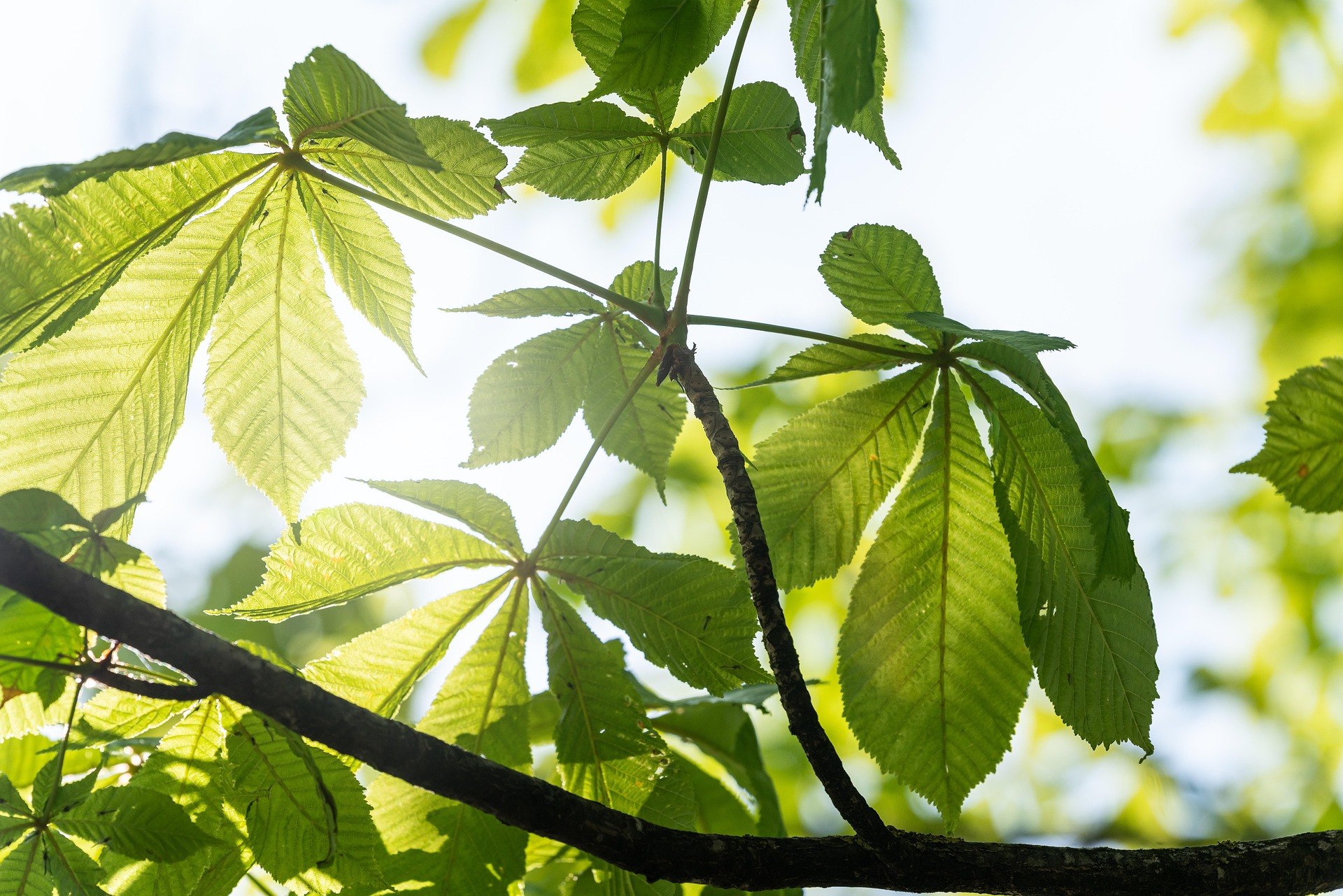
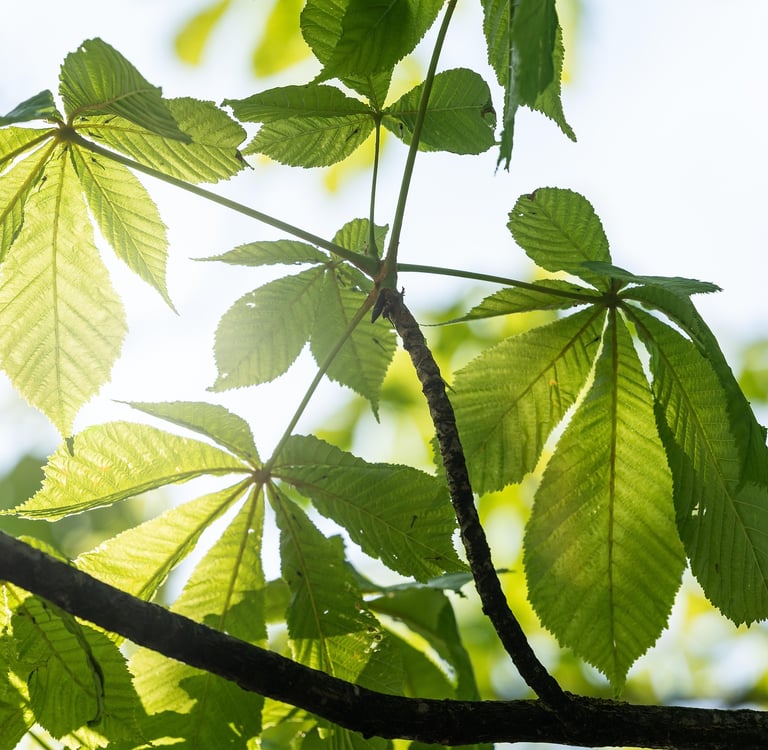
We already know that the leaf is the part of the plant that makes food—like a tiny food factory, busy catching sunlight to make life! 🍃🏭🌞 But have you ever noticed how the leaves arrange themselves on a plant? 🌱✨Let’s take a closer look together. 🔍Here’s the first speciment with an interesting arrangement I’d like to show you.
Look carefully at its stem… 👀 Do you see how the leaves grow? Only one leaf at a time grows along the stem. One here, one there, zig-zagging up and up.This is called an alternate arrangement—one leaf at each node, on opposite sides as the plant grows upward.This way, each leaf can catch the light without being hidden by another. 🌞➡️⬅️🌱
🌿 Now, look at this arrangement.
Here, the leaves grow in pairs, sitting directly across from one another like a partners. 🌱↔️🌱 This is called an opposite arrangement—like two friends standing together, facing the Sun. 🌞👫
🌿 And over here in this example.
See how several leaves grow out from the same point? 5 ! 🌱🛞🌱 This is called a whorled arrangement—a whirling rays of leaves, all stretching out to catch as much sunlight as possible.
At each place where a leaf grows, there is a special spot called a node. 👏 No 👏 de 👏 The word comes from Latin nodus, meaning “knot.” 🪢🌿
So .. 1 leaf per node ➔ Alternate from Latin alternat- 'done by turns'
2 leaves per node ➔ Opposite from Latin oppositus ' set against '
and 3 or more per node ➔ Whorled from old English wharve 'whorl of a spindle'
But some plants do something completely different! 🌱🌞 Instead of stretching their leaves up a stem, they grow them right at the base in a circular pattern—like a leafy flower. This is called a rosette, because it looks like the petals of a little rose. 🌹🌿 The name rosette comes from Latin rosetta, meaning “little rose.”
You can find rosettes in dandelions 🌼 radishes and even cabbage 🥬
🌞 These plants grow in open sunny areas and don’t need a tall stem to reach light—instead, they spread their leaves wide and low, forming a flat sun-catching disk close to the Earth. It’s their own version of a sun-worshipping temple, hugging the ground!
But why all these different arrangements? 🤔 Because in the plant kingdom, there is a great, silent struggle for light. 🌞Imagine you need sunlight to survive—what would you do? 💪🌿Plants can't just move to more sunny place, they must find a clever ways to catch the sunlight. The more light a leaf catches, the more food it can make for the whole plant. 🌱🌍
Big, tall trees easily catch the sunlight high above. 🌳🌞 But small plants must be creative. 🌱✨ Some race to grow early in spring, before the trees above get their new leaves. 🌸 Others are creeping up a wall or a tree, arranges its leaves like a living curtain, making sure no sunlight is wasted. 🧩🌿Ivy doesn’t have a strong trunk to grow tall on its own—so it climbs instead! Using smart stems and special aerial roots, it grips onto bark and stone, twisting upward to reach more light. It’s nature’s quiet hiker ! 🧗♂️🍃☀️
( 📜 Bring out Chart C: The Sun Worshippers. ) Look at this beautiful chart! 🌞🏛️🍃Each plant is like a Temple of the Sun. Each leaf is like a priest or priestess, carefully placing themselves to worship the light, because their lives depend upon it. 🌞🌿✨ Not a single beam of sunlight is wasted. Every leaf stretches, spirals, and reaches—honoring the great giver of life: the Sun. 🌞❤️
Let's go outside.🌱🌞 🌟Lay under a tree and look up—can you see the light peeking through? If there’s a gap, maybe you’ll find another Sun Temple below, quietly gathering light. 🏛️✨
💭 I wonder… Can we find a rosette, a whorl, or an alternate arrangement in the plants outside? Which plant is the cleverest Sun-worshipper of all?
🌟 Possible Follow-Up Explorations:
🌱 Sunlight Leaf Hunt:
Create chart and go outside to find examples !Find alternate, opposite, whorled, and rosette patterns. How many of each can we find? 🌿🧮
🌳 Lie under a tree:
Look up—how much light comes through the leaves? Only little chinks of sunlight make it to the ground! 🌞🍂
🌿 Observe hedges and ivy:
Notice how hedge plants grow leaves only on the outside, and how ivy leaves intertwine like a green mosaic. 🌱🧩🌞
🖍️ Create a Sun Temple Drawing:
Draw your favorite plant as a Temple of the Sun, with leaves reaching like priests—and spiraling toward the light!
Note: If you can, bring real specimens of leaves instead of just pictures. 🌿✨ Holding a branch in your hand—turning it, examining its nodes, and seeing how the leaves grow—brings the learning to life. 📚🔍
Real plants help children observe texture, smell, and detail up close. A photo can show shape, but a leaf can tell a story. 🌱💛
With Montessori joy,
Vanina 😊