
Supernova’s Golden Gift ✨ The Journey to Earth’s Heart ✨☄️
💍 A follow-up story that grows from Chapter Creation and Heavenly Bodies—in the Geography Album and naturally reaches Chapter Invention and Discovery—in the History Album. 🌍✨ Тhis story it invites children to follow gold backwards beyond Earth and the Sun—to an ancient star, a supernova, and the spinning cloud of gas and dust from which our Solar System formed. 🌟 It recalls how particles obeyed their laws, found their groups, cooled, and created Earth, while heavier materials—including much of its gold—travelled towards the planet’s heart. The story then follows gold into clever human hands, creating a natural bridge to invention and discovery: people noticed it glittering in riverbeds, experimented by hammering and shaping it, stamped it into trusted coins, used it to illuminate works of art, crossed oceans searching for it, and discovered new ways to use it in technology. 🔨🪙🎨🔭 Gold becomes much more than a precious metal. It becomes a thread connecting the Universe, Earth, and human beings. And, as always, the story does not finish with an answer. It opens doors for further exploration: 💭 Where can we find the largest solid-gold sculpture in the world, and how heavy is it? 🌍 Where are the largest gold mines on Earth? 🔭 Why are the mirrors of the James Webb Space Telescope covered with gold?
GEOGRAPHY STORIES
9/1/20266 min read


Look at this gold ring. 💍 It is small and shiny. Gold is famous as a preascious metal. Perhaps you have seen gold in a ring, a coin, or a painting. But every piece of gold carries a story much older than Earth. 🌍✨ piece of gold carries a story much older than Earth. 🌍✨
☀️ Do you remember the great flaming forth from our First Great Story? 🌌 That was the beginning of our Universe. It took a very, very long time before stars and planets were formed. Some enormous stars were born, and eventually they reached the end of their lives and exploded in a tremendous burst of light and energy. Scientists named this beautiful colorful explosion supernova. 💥✨Meaning “a very great new star.” This explosion scatterеd heavy elements through space. One of those elements was gold. ✨
So, a very, very long time ago, before our Earth and even our Sun were born, tiny gold specks were travelling through the vast darkness of space. They drifted together with gas, dust, and many other tiny particles. Then this great cloud began to spin like a top. 🌌 You may remember that, in the beginning, different particles joined together and formed new substances. Slowly, the particles gathered together, following their laws.
In the middle of this great spinning cloud, our Sun was born. ☀️ The cloud around the young Sun was called a solar nebula. Solar means connected with the Sun, and nebula means cloud. A solar nebula was like a giant space workshop. In this workshop, the Sun and the planets slowly began to form. Around the young Sun, smaller clumps gathered together. They bumped into one another, clung together, and grew bigger. Over a very long time, they became planets. They were all spinning and dancing happily around the Sun, following their invisible paths through space. 🪐💃
One of those planets was Earth. 🌍 Young Earth was enormously hot and still changing. Inside it, materials were moving, mixing, melting, and separating. The particles continued to follow their laws. When they were hot, they danced up, up, up. When they cooled, they came closer together and fell back down. 🔥⬆️⬇️ This great dance of the particles continued for a very long time.
The heavier substances slowly sank deeper, while the lighter materials stayed closer to the outside. This is how the different layers of Earth began to form. But today, my story is not about all the layers of Earth. That is another story for another day.
Today, I want to tell you more about the golden gift of this colorful supernova. ✨ When Earth was young, much of its gold began to sink towards the centre. Down it went, thousands of kilometres down! ⬇️ It travelled deeper than the deepest mine. There was no road, no train, and no lift, only heat, darkness, and the longest underground journey you could imagine. The gold disappeared from sight, but it did not disappear from the story. It became part of the hidden layers of the Earth.
Much of the gold became hidden deep inside our planet. But the story of gold was not over. Later, rocks from space crashed into the young Earth, bringing more star-made materials with them. ☄️ Some gold remained much closer to the surface, where, billions of years later, human beings would finally discover it. Sometimes running water wore away rock and carried tiny pieces of gold into streams and riverbeds. Imagine looking among ordinary grey stones and suddenly seeing something flash in the sunlight. ✨
Human beings are curious, so they began to experiment with it. When people struck many stones with a hammer, the stones broke. But gold behaved differently. When they hit gold, it became flatter. They hit it again, and it became flatter still. 🔨 Gold could be shaped without breaking easily. Human hands could turn it into beautiful objects. 🔨
Different people looked at this shining metal and imagined different things. For the Egyptians gold was "the flesh of the gods" . Skilled craftspeople made golden jewellery, decorations, and treasures. Rulers and important people wore gold to show their importance and that they are as important as gods. While for the Inca, gold was not only beautiful, it was sacred.They connected it with Inti, the Sun God and called gold “the sweat of the Sun.” ☀️✨
Far away in South America, gold had another special meaning. Among the Muisca people, there was a ceremony that later gave rise to the famous story of El Dorado. ✨ El Dorado means “the golden one.” Imagine a ruler covered with fine gold dust, shining in the sunlight. He travelled on a raft to the middle of a sacred lake. There, beautiful gold objects and precious stones were offered to the sacred waters. 🌞✨When Europeans heard stories about this ceremony, something curious happened. The story grew bigger and bigger. Soon people were no longer searching for one golden person. They began dreaming about a whole city of gold! Explorers travelled across mountains, forests, and rivers searching for this mysterious place.
Still, gold kept fascinating human beings. ✨ Some people saw it as sacred, some as beautiful, some as a sign of power, and others discovered that it could be useful for trade. But there was a problem. Imagine having to weigh gold every time you wanted to buy something. ⚖️ Was it heavy enough? Was it really gold? Human beings needed an easier way. More than 2,500 years ago, in a place called Lydia, in what is now Turkey, people began making pieces of gold in carefully measured weights and stamping them with special marks. 🪙✨ After that buying, selling and trading became faster, easier, and more trustworthy. 🪙✨ Gold had found another job—it had become money. 💰
But human beings did not only use gold for money. Remember, human beings are creative! ✨✨ They did not only want to wear gold or use it for coins. Artists began to ask another question: “What else can we do with this shining metal?” They discovered that gold could be hammered thinner and thinner...They took a tiny piece of gold and hammered it… and hammered it… and hammered it again 🔨✨ until it became unbelievably thin—almost like a sheet of glowing paper!This is called gold leaf. 🍃 Why leaf? Because it is so thin and delicate, just like a leaf.
Artists used gold leaf to decorate books, paintings, and even religious buildings. 📖✨ Some golden domes shine so brightly that you can notice them from far away. Inside, you may also find paintings of important figures glowing against golden backgrounds. The gold almost seems to say: “Look here. This is important.” ✨

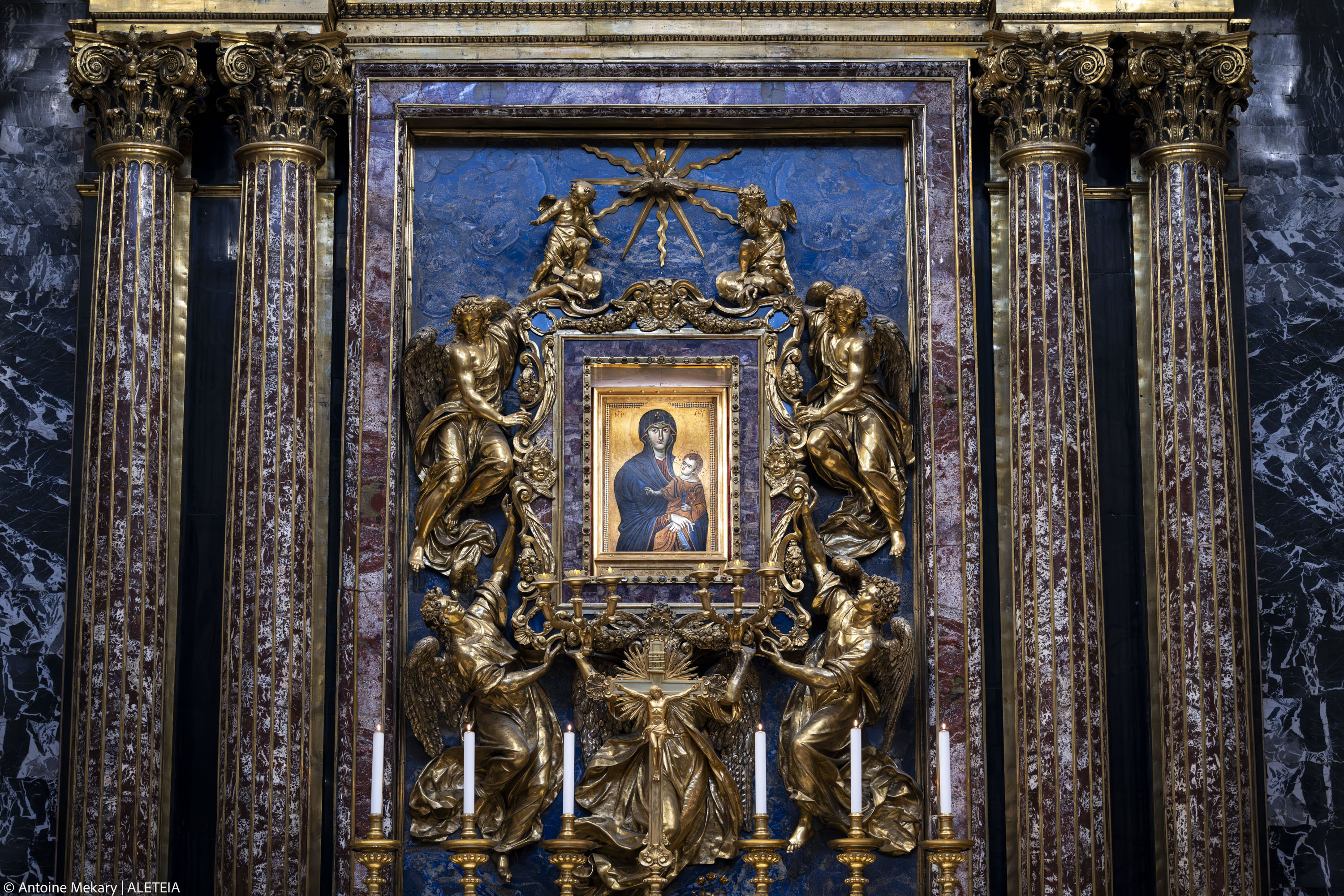

But the story of gold did not end in books, buildings and art.
Its shine kept pulling human beings toward new places, and new adventures...When gold was discovered in California almost 180 years ago, the news travelled around the world without internet. People began to whisper, “There is gold in the rivers!” Soon, tens of thousands left their homes and crossed mountains and oceans, hoping to find their fortune. This became known as the Gold Rush. ⛵⛏️But finding gold was not as easy as the stories had promised.
At first, people searched for pieces of gold glittering in riverbeds. But as this gold became harder to find, people began digging deeper and moving greater amounts of rock. People dig enormous holes to find gold. One huge gold mine is called Muruntau. It is in Uzbekistan. ⛏️ ( Show on the map)
Imagine standing at its edge.The mine is open to the sky, like a gigantic bowl carved into Earth. Roads curl around its sides like enormous ribbons, carrying trucks deeper and deeper underground. Can you see those tiny yellow speckles on the roads? 🚚 Those are mining trucks! From up here they look like little toys, but they are actually enormous machines! Imagine climbing into one and beginning the journey down. A round and around the twisting roads you would go, travelling for many minutes before reaching the deepest part of this gigantic bowl. And what do you think you would find when you finally arrived at the bottom? A sparkling pool of gold? ✨ A treasure cave filled with enormous golden nuggets? Maybe piles of gold waiting to be collected?
No! You would mostly see... rock. 🪨 Ordinary-looking rock! And notice—I said rock, not gold! The ancient gold that became part of Earth was scattered around. It did not all land together in one giant pile of treasure. ✨Most of the gold is hiding inside that rock in pieces so tiny that our eyes may not even see them. People have to break the rock, load it onto those enormous trucks, carry it away, and crush huge amounts of it just to collect tiny bits of gold hidden inside. 🪨✨ These pieces are called gold nuggets. Imagine finding one while looking among ordinary stones!
Gold certainly knows how to hide! ✨ But humans certainly found ways how to find and mine it! Gold began its journey among the stars, and today humans have taken gold back toward the stars. 🌟 Look at the James Webb Space Telescope Its huge mirrors look golden, but there is only about as much gold on them as the weight of a golf ball flattened into a thin gold leaf. 🌟
Now my ring does not look like an ordinary piece of gold anymore. Knowing the story of gold, I will always remember that I carry on my hand a tiny piece of ancient stardust, shaped by the creativity of human hands. 💍✨🌟
I wonder... Where are the five largest gold mines in the world? Perhaps you could find them and make a map showing where they are and how much gold each mine produces every year. 🗺️⛏️What is the largest gold nugget ever found, where was it discovered, and how heavy was it? ✨ Where can we find the largest solid-gold sculpture in the world, and how heavy is it? Why did scientists cover the James Webb Space Telescope’s mirrors with gold? How can gold protect an astronaut’s eyes from the Sun? 👩🚀Can we make a gold in a lab? How?
With Montessori joy,
Vanina 😊