
The Earth’s Cleanup Crew ♻️ The Vulture 🦅✨
🌍 A follow-up story that branches from Zoology: Introducing the Animals in the Biology Album. 🦅✨ It invites children to discover a member of The Earth’s Cleanup Crew—the vulture, a bird whose strange-looking body holds a beautiful secret: every part has a purpose. Its hooked beak, wide soaring wings, sharp senses, feathered body, bare head, and powerful stomach can lead children back to the Chapter Zoology with stories of animal needs, food, protection, movement, adaptation, classification, and body systems. 🌬️🪽 This story also makes visible an often-hidden relationship: animals do not only hunt, hide, migrate, build homes, or care for young; some also return dead bodies back into the great cycle of life, connecting vultures with scavengers, decomposers, insects, bacteria, soil, plants, and finally the whole ecology of Earth. 🌱🦠 Chapter Zoology reminds us that children are invited to ask how animals live, what they need, what they eat, how they reproduce, and how their bodies help them survive; it also points toward ecological relationships, including organisms that depend on dead plant and animal material and the many ways organisms interact. The vulture becomes a bridge from “Who am I?” animal stories and Animal Question and Answer Cards into adaptation, bird classification, vertebrate body systems, and later Ecology, where children can wonder: “Is a scavenger only eating, or is it also serving the whole?” “What would happen if the cleanup crew disappeared?” “Which other animals, fungi, or tiny living beings help death become life again?” 🌿💭
BIOLOGY STORIES
5/27/20264 min read
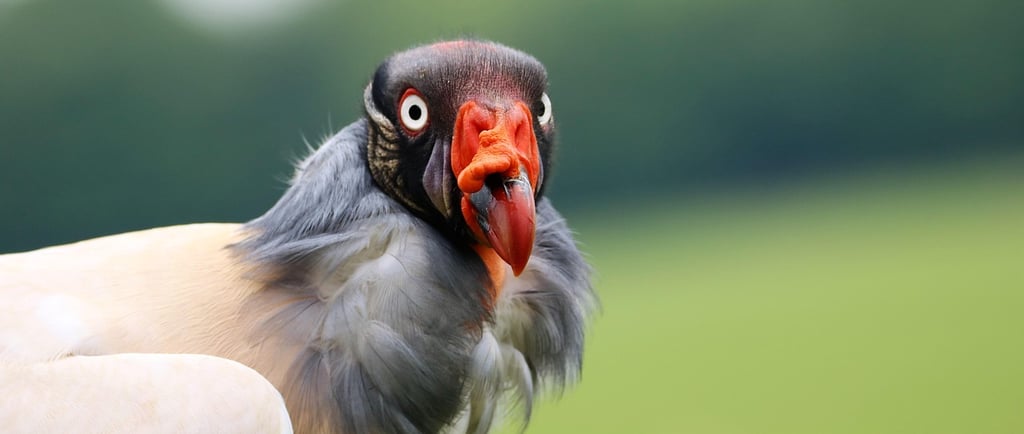
Do you help clean up after a big meal? Maybe crumbs on the table, apple cores, peels, or leftovers? In our homes, someone has to clear the mess. In nature, there are also cleaners — quiet workers who help keep the Earth healthy. The vulture is one member of this great cleanup crew. Let’s clap it:👏 vul-ture 👏 The vulture is one member of this great cleanup crew. But it does not carry a broom, a sponge, or a bucket. Its cleaning tool is much stranger — and much sharper. It cleans with its beak! 🦅✨“What does this beak remind you of — a hook, a knife, a pair of pliers?”
From Latin word vultur, that means “tearer.” What a name! It perfectly suits the vulture’s work. This bird cleans by tearing its food apart with a strong, hooked beak — a beak shaped like a special tool for its important job.
Scientists call vultures birds of prey. That means they belong to a group of birds with strong beaks, sharp claws, and excellent senses. Eagles and hawks are birds of prey too, and they also have hooked beaks for tearing food. But here is the difference: eagles and hawks often hunt living animals. Vultures usually wait. They look for animals that have already died. This kind of animal is called a scavenger. Let’s clap it: 👏 scav-en-ger 👏 Scavengers eats what is left behind.
And before you say, “Oh, that is disgusting!” 😬 — wait. Without vultures and other scavengers, dead animals would stay on the ground much longer. They would smell. They could spread disease. Flies, rats, and harmful bacteria might multiply. But the vulture comes, bends down with its bare head and hooked beak, and begins its work. In a short time, it helps return that body back into the great cycle of life. 🌍
Now imagine you found something rotten and someone said, “Take a bite!” Your body would probably shout, “No way! No how!” The moment you snif the rotten food you might gag or feel the need to vomit. That is not weakness — that is your body protecting you from bacteria and poisons that can grow in rotting food.But the vulture has a very different body. A vulture’s stomach is extraordinary. It is so acidic that it can destroy many dangerous germs that would make other animals sick. Imagine having a stomach like a bubbling science laboratory! 🧪 That is one of the vulture’s special gifts.
Look carefully at this vulture. What do you notice? Are the feathers spread evenly like on many other birds? What about the head?Many vultures have very little feathering on their heads. That might look strange, but it is useful. It is an adaptation. Let’s clap it: 👏 ad-ap-ta-tion 👏
An adaptation is a body part or behavior that helps a living thing survive. But what is this bald head adapted for? When vultures feed, feathers around the head could become dirty, bloody, and full of bacteria. A bare head is easier to keep clean. The sun can shine on it, the air can dry it, and the vulture stays healthier. ☀️
When people first see a vulture for the first time, most people notice the bald head, the wrinkled skin, and the hooked beak. In Africa, the vulture is even included in a group sometimes called the “Ugly Five.” What a funny name! Ugly to whom? In nature, beauty is not only bright colours, soft fur, or pretty songs. Beauty can also be usefulness, adaptation, and service to the whole planet. The vulture is one of the five. Who are the other four? That is a mystery you can investigate later. 🔍
Some vultures have such powerful eyesight that they can spot food from very high in the sky. Imagine looking down from the clouds with eyes like powerful binoculars, as if the world below could suddenly zoom closer and closer. 🔭🪽
Other vultures, like the turkey vulture, have an excellent sense of smell. They can detect gases rising from dead animals hidden under trees. Imagine a smell trail floating up into the air like an invisible ribbon, and the vulture following it across the sky. 👃🌀
There are even vultures with surprising specialties. The bearded vulture can eat bones! Sometimes it drops bones from high places to crack them open. The Egyptian vulture has been seen using stones like tools to break eggs. Some vultures are not just cleaners; they are problem-solvers.
But vultures have a problem too. In many places, people misunderstand them. Some people think they are ugly, frightening, or unlucky. Others poison predators, and vultures may die when they eat poisoned animals. When vultures disappear, nature loses one of its cleaning teams and important part of the food chain.
So the next time a vulture circles overhead, or perches in a nearby tree, we might remember of his important job and say, “There goes the cleaning crew of the Earth.” 🌎 A bird with a bald head, wide wings, sharp senses, a powerful stomach, and a very important job.
The vulture does not sing a pretty song like a nightingale. 🎶 It does not flash bright colours like a parrot 🦜 — though some vultures, like the king vulture, do have colourful faces and markings! 🌈🦅 Its beauty is quieter. It serves life in a hidden way, by helping death become part of life again. 🌍✨
I wonder…
What would happen if scavengers dissapear from the food chain ? Which other animals help clean up dead plants and animals? Who arrives first at a dead animal — insects, birds, mammals, fungi, or bacteria? Can you draw a food chain that includes a vulture? What is the difference between a predator, a scavenger, and a decomposer? Which vultures live closest to us, and how far can they travel? 🦅✨Who else belongs to nature’s cleanup crew? 🐜🪱🦠🍄 What are other members of the ugly five?
With Montessori joy,
Vanina 😊