
THE INVERTEBRATES🪼🐚 Nature’s Early Masterpieces ⭐
🐚 A follow-up story that branches from Classification of Living Organisms and reaches back to Life on Earth and Zoology, Introducing the Animals in the Biology Album ⭐🪼✨ It invites children to walk through “Nature’s Early Masterpieces”—the invertebrates—not as a list to memorize, but as a living museum of body plans, just like the Timeline of Life hints with its great red lines for invertebrates and vertebrates 🕰️🌍 In the Animal Kingdom classification work, children meet the key idea that animals can be divided into those with backbones (vertebrates) and those without (invertebrates)—and that invertebrates solve life’s problems in different ways: some with soft bodies, some with shells, some with exoskeletons 🐚🛡️—which quietly sets the stage for the next “invisible” branching stories in the same chapter: Kinds of Insects, Kinds of Arthropods, and then the leap into Vertebrates and the later vertebrate groups, and because Zoology, Introducing the Animals reminds us to go back and forth between animal studies and the Timeline of Life, this story becomes a springboard for real observing, comparing, and “Going Out” 🔎🥾With this story children begin to see classification as a map of relationships and adaptation, not just names on cards 🌿🐛🌊 The story plants wondering questions like: “Where do we find arthropods near us? How does a cnidarian’s stinging cell work? 🎯🔬⚡Echinoderms live only in saltwater—why might that be? What do they need from the sea that fresh water can’t give? 🌊🧂🤔"
BIOLOGY STORIES
6/2/20269 min read
Do you remember the Timeline of Life 🕰️🌍—all the experiments that happened before we came on Earth? All those ancient “tries” nature made, testing out different ways to build a body, to breathe, to eat, to move, to survive ✨🔬
Today we are going to look at one of those experiments called invertebrates 🐛🪼🦑. Let’s clap that long word: in-ver-te-brates. The word comes from Latin: in- means “not” or “without,” and vertebra means one of the little bones of the backbone. So invertebrate means: an animal without a backbone.
I would like to begin this story with a little secret that will blow your mind 🤯: if all the animal species on Earth marched in a grand parade, the invertebrates would make the parade go on and on and on! 🐛🪼🦑🐜🦋🦀 The animals with backbones would be there too, but they would be only a small part of the parade. Invertebrates are the great majority of animal species on Earth.
And because there are so many invertebrates, we cannot meet them all today. Instead, we will enter with our imagination: The Animal Kingdom Gallery 🏛️🐾. Today, we will visit one part of that gallery: the Gallery of Invertebrates 🏛️🐛🪼🦑.
We are going to open six doors today. Behind each door is one large group of invertebrates, called a phylum. Let’s clap the word: phy-lum. The word comes from Greek phylon, meaning “tribe,” or “kind.” In each room, we will meet one key animal 🔑. That animal will give us one body-plan clue and help us unlock the story of many other invertebrates with a similar design.
So today, every room we enter belongs to the world of animals without backbones.
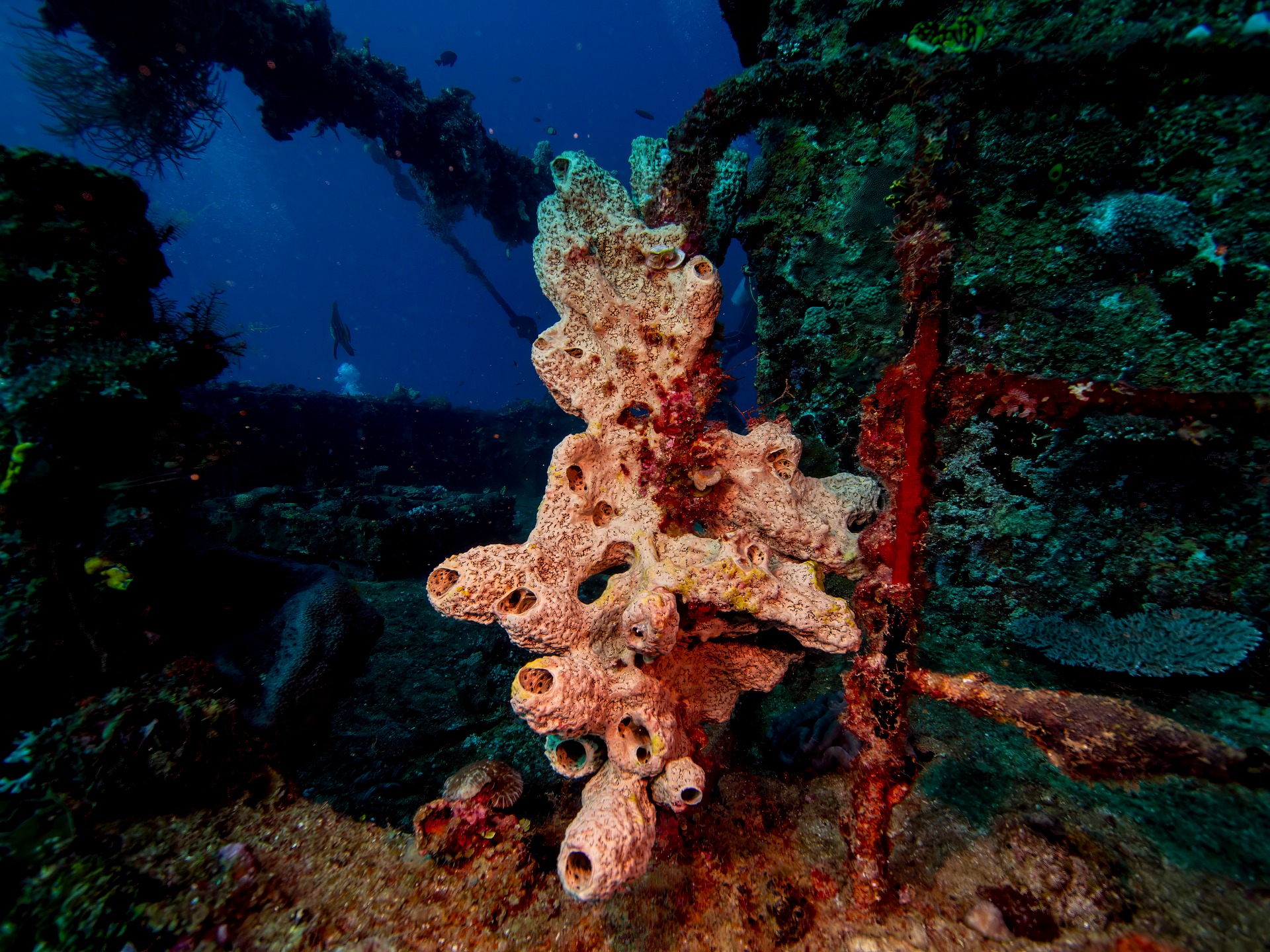
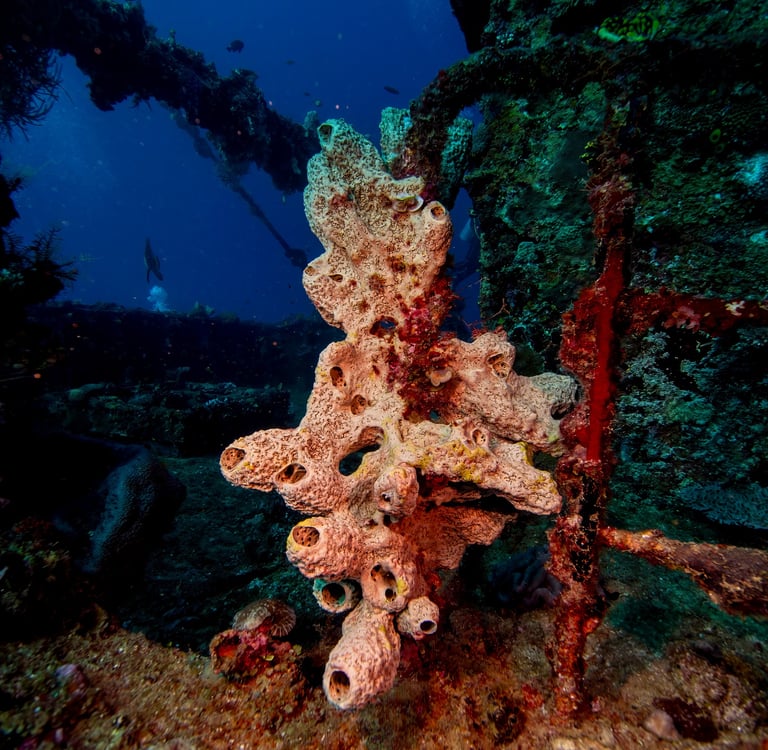
We open the first door… and we meet the sponge 🧽🌊. Unlike the sponges in your kitchen, these sponges are living animals! They are called Porifera, let’s clap it: Po-ri-fe-ra and the name is a message in Latin: porus means pore and ferre means "to carry" or "to bear"—so Porifera are the pore-bearers 🕳️🧽. And the moment you look closely, you can see why: holes, holes, holes—like a living filter. For a long time, people even thought sponges were plants because they often stay in one place and don’t move in an obvious way 🌿😅. But when scientists observed closely, they noticed clear signs of active living processes, not a plant just sitting there.
The sponge helps us imagine one of the earliest big steps in animal life: becoming multicellular. It’s as if lots and lots of cells agreed to live together as one body 🤝🔬. But they still keep an ancient independence—each cell digests its own food 🍽️🧫, like every cell has its own tiny kitchen. Sponges live always in water 🌊. Most don’t move around much; they settle onto a rock, the sea floor, or even another animal 🪨 and simply “choose” that spot. Then they let the ocean come to them. Water is pumped through their bodies with the help of special hairs, moving through channels and pores 🚰. As the water passes through, the sponge filters out what it needs—oxygen and nutrients 🌬️🥣—and the waste is carried away. Then the water is expelled out through the top of the body. And when we talk about time… this is deep time: sponges have been on Earth since at least the Cambrian, and the oldest sponge fossils are about 600 million years old 😲🦴. That is an ancient experiment that worked—and kept working.
Humans noticed sponges were useful too. For a very long time, people collected natural sea sponges for bathing and cleaning 🛁🧼, and in the Roman world there was even a famous tool sometimes described as a “sponge on a stick” used in the public toilets, you may know already for what purpose it was if you have read the Story of Toilet Paper. 🧽🪵🪠.
Although most sponges are famous for filtering tiny food particles, some Porifera are carnivores 😲🍤. No feet to run, no hands to grab—yet some sea sponges can snare tiny crustaceans and then digest them. Just imagine!🧽🕸️.
As we leave the sponge room, the floor seems to turn into moving currents beneath our feet 🌊🍃. The next room is filled with animals that often drift and float. Here we meet the jellyfish 🪼✨ and its relatives, the group called Cnidaria — the “c” is silent, so we say ni-dar-i-a. Let’s clap it: Cni-dar-i-a.Their name comes from Greek: knidē means nettle—because many cnidarians have stinging cells, like tiny nettle-stings packed into microscopic darts ⚡🪼.
In the Timeline of Life, cnidarians remind us of when cells began to specialize—lining up and taking on different jobs—so we begin to see tissues, groups of cells developed for one function 🧩🔬. A jellyfish can be imagined as a single sack-like body with one opening—food goes in and waste comes out through the same place 😮➡️⬅️. Many drift in ocean currents 🌊🍃, carried wherever the sea takes them. And when we look around this room, we realize jellyfish aren’t alone: there are sea anemones and corals too 🪸🌺. Corals, especially, do a fantastic job of clearing the water of salts—quiet builders and cleaners of the sea 🌊✨and they do something else that affects the whole sea around them: coral structures create perfect shelter and hunting grounds for many kinds of marine life 🐟🦀🦐, like a busy underwater neighborhood. They also help protect shores by breaking up waves before they reach the coast 🌊🛡️.
Next, we step into a room where the body plan becomes long and ringed. Here is the earthworm 🪱⭕, representing the Annelida. The name Annelida comes from Latin anulus, meaning ring—and you can almost see the rings in the worm’s segments 🔁. The earthworm has a long cylindrical body, divided into segments, and it has bilateral symmetry, a left and a right side ↔️. It likes it damp, not too dry 🌧️.
And the earthworm has an enormous job for the land: it helps bring air into the soil, aerating it 🌬️🌱, which makes it easier for the soil to absorb water. It’s a small animal doing big work. Here comes another important “upgrade” in the story of life: annelids have two openings—food goes in one end and waste goes out the other ✅➡️➡️✅. The worm moves forward, so food comes in the front and waste leaves behind—handy! 😄 This idea of having a digesting tube instead of a sack becomes a winning design that many later animals keep. Worms can live on land and in water 🌍💧, and they can move by contracting their segments like coordinated muscles 💪🪱. And in the Annelida room, there are other ringed, segmented relatives too—waiting for anyone who wants to research further 🔎📚. In some countries members of anelidas are cooked and presented as delicacies.
Now we enter a room that feels like a treasure chest of shells and ocean designs 🐚✨—and it comes with a big announcement: we are stepping into the second-largest animal phylum in the Animal Kingdom Gallery. Our key animal here is the mussel, and the group is called Mollusca! 🤯🐚. Let’s clap it: Mol-lus-ca. That name comes from Latin mollis, meaning soft—and these animals really do have amazingly soft bodies. If your body is soft, a hard shell can be brilliant protection 🛡️🐚. One shell… or sometimes two shells hinged together! ✅ Problem solved! Some mollusks can snap their two shells shut so quickly that a predator has no chance to reach their soft body 😮💨🛡️🐚. But sometimes—snap!—a tiny grain of sand slips in during the speed… and now there’s a problem! 😬🏖️ If you had something annoying in your mouth, you’d spit it out or pull it out with your hands 🤲😝… but the mollusk can’t do that. So it solves the problem in a slow, patient way: it coats the irritant layer by layer, and over time that irritation can turn into a treasure we call a pearl 💎🐚.
And just when you think “mollusk = shell,” you notice something surprising in this room: there are bold members with no outer shell at all. The octopuses and squids 🦑😮—still soft-bodied, but much larger, faster and smarter, using other strategies to survive.
Most mollusks live in the salty ocean 🌊🧂, but not all of them. Some live in fresh water, and some even live on dry land 🌿.And you’ve probably met the famous land mollusks in real life: the snail…🐌
People have used mollusk shells for making jewelry—necklaces, beads, and shining decorations ✨📿—and the beautiful inner layer of some shells, has been used for shiny buttons that catch the light like a tiny rainbow 🌈🔘. In some parts of the world, shells—especially cowries—were even used as money, traded because they were durable, portable, and hard to counterfeit 💰🐚. You might have heard of the famous ancient purple dye, Tyrian purple was made from the secretions of certain molluscs found in the Mediterranean Sea —so valuable that it became linked with power and royalty 👑💜. But that is a story for another day.
Next we walk into a room of rough textures and starry shapes ⭐🦔🌊. Here we meet the sea star, representing the Echinodermata. Let’s clap it: E-chi-no-der-ma-ta. Their name tells us what to expect: it means “spiny skin.” These animals live only in saltwater 🌊🧂, and many show radial symmetry, often with five points ⭐. Fossils for this group reach back to about 560 million years ago 🦴🕰️—which is incredibly ancient… though that would still be after the oldest sponge fossils we discovered in Porifera room. (about 600 million years old) ⏳🧽.
Echinoderms have a very fun “movement invention.” Instead of legs, they have tube feet that can stick and release, stick and release—like hundreds of tiny suction-cup shoes 👣🧲. You can imagine them saying: “stick… step… stick… step…” as they creep along the sea floor. And inside their bodies is an even stranger secret: a water-vascular system 💧➡️⭐. Think of it like a set of little water-filled tubes—almost like tiny water “pipes.” It’s almost as if the sea star is using water power to move.💧⚙️⭐.
And then comes the “wow” ability: many echinoderms can regenerate. If a sea star loses an arm, it may grow another one 😲🦾. And in this room we notice different lifestyles too—some are hunters, like the sea star 🏹⭐, while others are extra spiky, like the sea urchin 🦔, and prefer to graze peacefully on the rocks 🥬.
And now we enter the busiest, most crowded room of all 🐜🕷️🦀—because here are the Arthropoda, represented by the ant 🐜. Looking back through all the earlier rooms, we realize something: this group arrives with a powerful new invention—legs, and not just legs, but jointed legs. That’s what Arthropoda means: jointed legs 🦵🔗. Their bodies are segmented, and even their limbs are segmented too, like living hinges built for movement.
Arthropods still have no backbone, but they have another kind of support: they wear their skeleton on the outside. This is called an exoskeleton 🛡️.
With jointed legs, strong outer armor, and very advanced sense organs, this body plan became unbelievably successful. Arthropods live on land, in water, and in the air 🌍💧🌬️. They are everywhere — and you can often spot them without even leaving home 🏠👀.
There are so many arthropods that if we could invite every kind of animal on Earth to a giant meeting, the arthropods would fill most of the room 🐜🕷️🦀🤯. Beetles, butterflies, ants, spiders, crabs, bees, and millipedes — all those jointed legs! This body plan worked so well that Arthropoda became the largest animal group on Earth by number of species 🏆.
Now we step back into the center of our Gallery of Invertebrates and remember what each member represents🔑✨..
The sponge helps us remember the Poriferans 🧽the pore-bearers 🕳️🧽
The jellyfish represents the Cnidarians 🪼 nettle or the stinging cells.
The earthworm represents the Annelids 🪱 with the rings.
The mussel represents the Mollusks 🐚 the soft bodies.
Тhe sea star represents the Echinoderms ⭐ the spiny skin.
Аnd the ant represents the Arthropods 🐜. the most crowded room full with jointed legs.
Today we walked through six rooms in the Gallery of Invertebrates. We met animals without backbones and discovered six great body plans. But behind every door there are more doors leading to other rooms…
Another day, we will zoom in further. We can open the Arthropod room and meet the jointed-leg superstars 🕷️🦀🔗. Then we can step even deeper into the insect world and become insect detectives, sorting by wings and tools 🐝🦋🪲🔎.
And later, our journey will continue toward another great invention in the story of life: inside support — the backbone 🦴🏗️. From there we can follow the rise of vertebrates: fish, amphibians, reptiles, birds, and mammals, each group finding its own way to move, breathe, eat, make more of itself, and protect itself🐟🐸🐍🦅🐐.
So this is not the end of the story. Another day, we will continue our journey through the great inventions of life 🗺️✨.
And now I wonder… 🔎 Can you find sponges in sweet water? What patterns can we notice when we lay out the photos ? Who has one opening, and who has two 🚪? Who lives only in saltwater 🧂🌊? Who has segments 🧩? Who has a shell, a mantle, or an exoskeleton 🐚🧥🛡️? Who can regrow body parts ⭐🦾? Or you can go outside and find some arhropods or other invertebrates living right here in our own area— look for them carefully on land and in the water. 🥾🌿💧🔎
Now you can explore the classification like a map and look at the clues each animal gives 🗺️✨. You may choose one Phyla and research the members inside. You can draw, make a little Phyla booklet, a chart, a model, or a short poem or a story about the group you have chosen. Or you can go out and try to find speciments from each of the Phyla.
An amazing website for further explorations of The Tree of Life.
With Montessori joy,
Vanina 😊