The Invisible Thread of Peace 🧵🌎🌱🕊️
🕊️ A follow-up story that branches from the Human Geography chapter in the Geography Album. 🌍✨ It invites children to discover how peace allows the great web of human interdependence to flourish—how people depend on one another for food, knowledge, shelter, and safety, and how cooperation creates harmony among nations and communities. 🤝🏽🌾 🌱🌎 This story leaves children to wonder: "What happens to the world when peace is broken?" —and to discover that peace begins with us, in every small action that ties the invisible thread stronger. 🧵🌏💫💭🕊️
GEOGRAPHY STORIES
9/20/20253 min read
Do you think families can do everything just by themselves? 🤔 Could they make their own electricity ⚡, grow their grain 🌾, mill it into flour 🍞, and then bake bread from it? Could they raise chickens 🐔 for eggs 🥚 and meat, grow cotton 🌱, spin it into fine threads 🧵, and weave those threads into clothes 👕?
No — we all need each other. Most of us don’t know the farmers who grow our food 🌽 or the people who make our clothes 👗. Some things we use come from far away across oceans 🚢✈️, while others are made close to where we live 🏡.
This great web of giving and receiving 🕸️ is called interdependence (from inter = between, and dependere = to hang upon). It means we “hang upon one another.” 🤝 But there is something invisible that holds this web together: peace 🕊️.
Peace is not something we can buy in a market 🛒 or hold in our hands ✋. It is something we choose. 💡 Long ago, when groups of people first met, they had to decide: Would they fight ⚔️? Or would they share 🍲? Every time people chose to share, they made peace.
Over time, people created symbols to remind us of peace: a dove flying free in the sky 🕊️, an olive branch 🌿 carried after battles, a circle with three lines inside 🔵✌️ to remind us of harmony, a bell 🔔 that rings to call for quiet reflection, even the lotus flower 🪷, standing for calm. You could even imagine peace as an invisible thread 🧵 tying people together all around the world 🌍.
Without peace, trade stops 🚫,schools close 📚❌,and communities are broken 💔. With peace, bridges are built 🌉, music is shared 🎶, and discoveries travel across the world 🌍✨. Peace is the invisible thread that ties all our lives together. 🧵🌏💫
As time passed, some brave people reminded the world that peace is always stronger than war:
Maria Montessori was a doctor 👩⚕️, who taught that children could build peace by learning and working together 📚🕊️.
Martin Luther King Jr. was a pastor ✊🏽💜who dreamed of a world where everyone is treated fairly and kindly ✊🏽💜.
Long ago, in Japan 🇯🇵, there was a little girl named Sadako Sasaki. She was only two years old when a terrible event happened — a bomb was dropped on her city, Hiroshima 💔. She survived, but many years later, when she was 12, she became very sick from the effects of the bomb. Sadako loved to run 🏃🏻♀️, play, and be with her friends. Even when she was in the hospital, she hoped she would get well again.
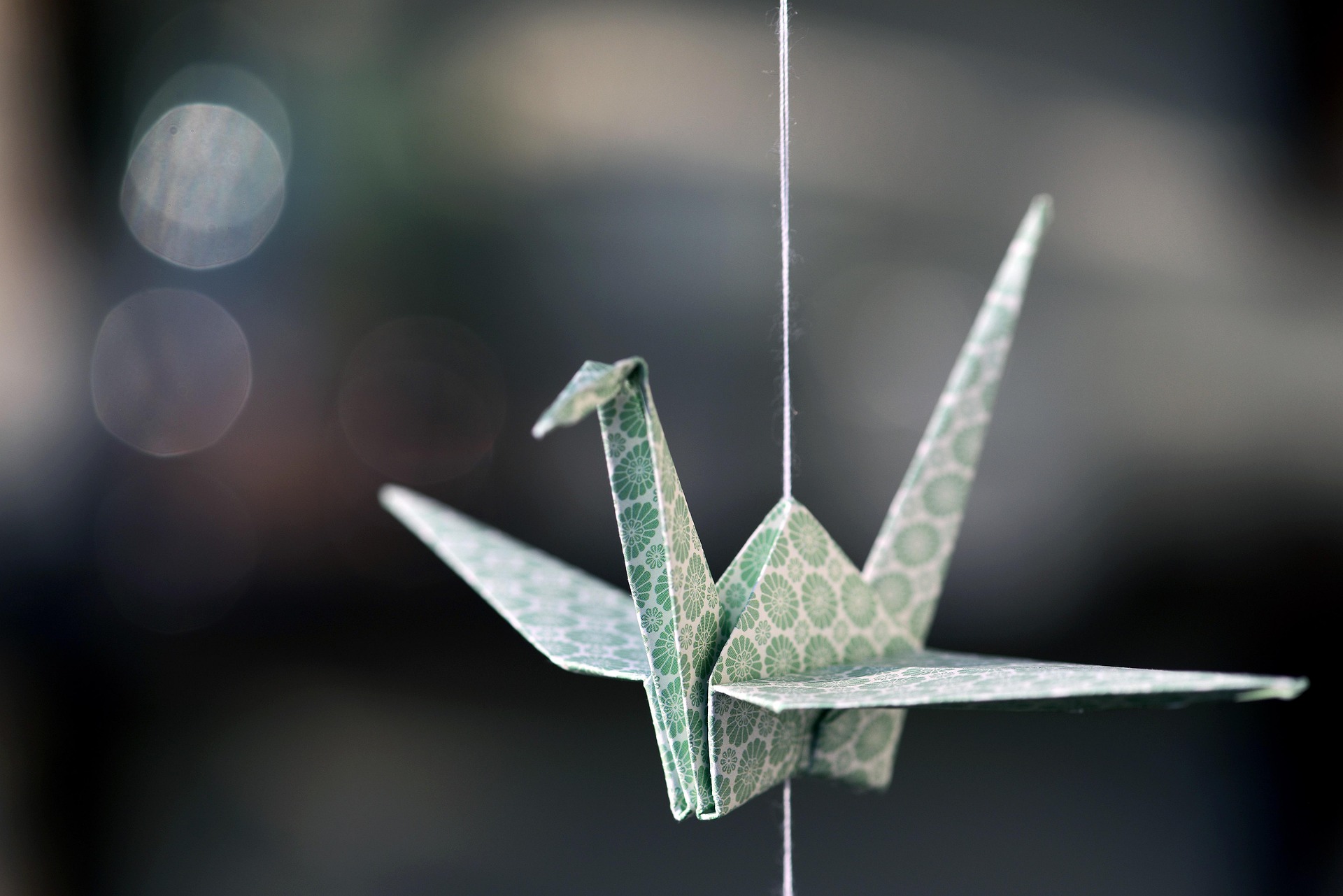
Then she remembered an old Japanese legend: If you fold 1,000 paper cranes, your wish will come true. So, Sadako began folding. Each day, she carefully creased the paper, turning it into a beautiful origami crane 🪁🕊️. Some she folded from medicine wrappers, others from any scrap of paper she could find. She made crane after crane, whispering her wish: “I want to live. I want there to be peace, so no one else has to suffer.”
Sadako folded hundreds of cranes. Even when she grew weaker, she kept folding, one by one, each a symbol of hope. Her friends and classmates helped her, finishing the cranes she could not.
After Sadako passed away, her friends built a statue of her holding a golden crane at the Hiroshima Peace Memorial Park. 🌸 Today, children all over the world still send origami cranes to this park, as a message that they, too, wish for peace.
Because peace is so important, the countries of the world made a special day to remember it. Every year on September 21 — the International Day of Peace — people stop for a moment to think about peace 🕊️🌍. Some ring bells 🔔, some plant trees 🌱, some sing songs 🎵, and some just sit quietly together 🤫 and some fold origami cranes. Peace begins with us. Every time we share, listen, and forgive, we are tying the invisible thread of peace a little stronger.🧵💖🕊️
🌱 Possible Follow-up Explorations:
Peacemakers Research
Invite the children to research and present about people who have worked for peace — each one in their own way. Some names you might offer as “keys” to spark their curiosity:
Maria Montessori 📚🕊️ – taught that education itself is the path to peace.
Mahatma Gandhi 🙏🏽 – showed how nonviolent resistance could free a country.
Martin Luther King Jr. ✊🏽💜 – dreamed of equality and fairness for all people.
Malala Yousafzai 🎒👧 – speaks for every child’s right to go to school.
Nelson Mandela 🌍 – worked for justice and reconciliation in South Africa.
Desmond Tutu ✨ – taught about forgiveness and the power of truth.
Jane Addams 🕊️ – helped create the Women’s International League for Peace.
Sadako Sasaki 🪁 – folded paper cranes for peace, inspiring children worldwide.
Peace Booklet: “I believe peace comes from…” Finish the sentence ✍️ (e.g., “…sharing food,” “…saying sorry,” “…listening to each other,” “…protecting nature”) and draw your own peace symbol.
Origami Cranes: Fold a paper cranes from different colors and send your wish into the world.
With Montessori joy,
Vanina 😊