
The Juicy Gem - The Pomegranate 🌿🍎✨
A follow up story rooted in the chapter of biology, presenting Types of Fruits. Yet, just like spices, fruits have traveled along ancient routes, spreading flavor and nourishment across the world. Through this story, we open the door to history, inviting further explorations of how different fruits have played important roles in various cultures around the globe. 🌍🍎 And even into the the human geography, where children can discover the origins of the fruits they find in their local stores, tracing the journey these fruits have taken from distant lands to our tables. 🍊🗺️
BIOLOGY STORIES
11/5/20243 min read
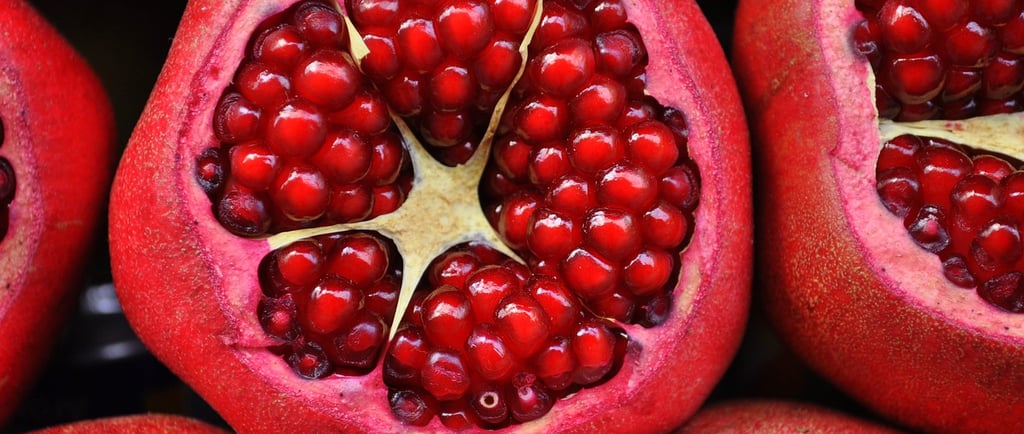
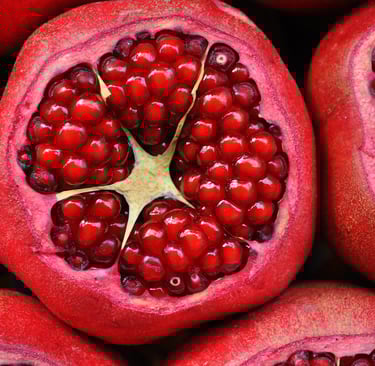
Let’s think about types of fruits! You already know some of them? Dry and fleshy fruits. Today I want you to think about fleshy fruits! ( let the children name all types of fruits they remember, this will show you what you need to represent again) Yes, Berriy, Aggregate , Pome, Pepo, Hesperidium, and Drupes. I brought today a fruit that’s packed with hundreds of juicy treasures inside? What type is it? Yes, today, I brought a very big berry—the Pomegranate! 🍎✨ The name comes from Latin! "Pomum" means apple and "granatus" means seeded, so it’s like a "seeded apple"! 🍎 👏 Po 👏 me 👏 gran 👏 ate
This is a unique type of berry called a "multiple-seeded berry", because inside its tough outer skin are hundreds of tiny seeds called arils. 🍇Remember the red fleshy covering around a seed in the Nutmeg? Yes, here we have it again, but a little different ! Each of these arils is like a little jewel—bright red, juicy, and sweet. Unlike other berries, which you can eat whole, you have to break open the pomegranate to get to treasure inside. 🌟✨
Pomegranates first grew in ancient Persia (modern-day Iran—find it on the map! 🗺️), and over time, people carried this juicy fruit along famous trade routes, like the Silk Road, sharing its seeds with the rest of the world. 🌍 But people weren’t the only ones helping pomegranates spread—birds and small mammals also lend a hand in nature! 🐦🐿️
Unlike with some spices who rely only on wind and humans, here there is a queue of helpers to help! Birds, like starlings, pigeons, and other fruit-eating species, love to snack on the sweet, juicy seeds. These birds peck at the fruit, eating the arils and either drop or push the seeds before or during their meal. Small mammals like rodents and squirrels also enjoy pomegranate arils too. They might take pieces of the fruit back to their burrows or hide them for later, forgetting where they’ve stored the seeds. Over time, some of these hidden seeds sprout, giving life to new pomegranate trees. 🌳🍃 Even monkeys in tropical regions also eat pomegranates where they are found, nibbling on the juicy seeds and helping spread them as they swing through the trees. 🐒
In human history, this fruit has always been a big deal! In one ancient healing system from India 🇮🇳 named Ayurveda , pomegranates have been used to help with digestive problems and to keep the heart healthy. In Greece🇬🇷, it is a symbol of life, death, and rebirth. And is mentioned even in the Mythology. In ancient Egypt,🌍 the pomegranate was also associated with fertility , but Why do you think? If we travel to some of the Islamic cultures, there the pomegranate is considered a fruit of paradise. The Quran , which is the holy book of Islam. 🕌mentions the pomegranate as a blessing from God, and it is associated with health and prosperity. In Turkey🇹🇷, there is a tradition to break open a pomegranate on the ground during weddings for fertility and good wealth. What a fun tradition! In the Jewish culture 🇮🇱 it is said that the pomegranate to contain 613 seeds, which is thought to correspond to the 613 rules for living a good life of the holy book of Judaism. The fruit is traditionally eaten during the Jewish New Year ( which usually falls in September or October, depending on the Hebrew calendar ), symbolizing fruitfulness and the desire for a good year ahead.
🌟I wonder if inside the pomegranate there are 613 arils for real ? What do you think would happen if you plant some of them? 🌍🍎✨ I wonder what does pomegranate represent in Christianity? ✝️
Possible Follow-up Projects
Art 🎨 Botanical Drawing of the Pomegranate with Watercolors
Geography 🗺️ Research and work with maps : Countries with Pomegranate Production
They can create a map showing pomegranate-producing regions. For a real-world connection, they can take a trip to the grocery store to find out where the pomegranates are imported from, reading the labels to see their country of origin.
Math ➕ Pomegranate Seed Count Experiment
Community Building 🧑🍳 Recipes with Pomegranate Taste Test
Children research and select recipes featuring pomegranates, such as pomegranate salad, sauces, or desserts. They can work together to cook the dishes and host a taste test event with the community, presenting what they’ve learned about the fruit’s uses.
Biology 🌱 Planting Seeds Experiment
Children plant pomegranate seeds and document the process of germination and growth. This promotes understanding of plant life cycles and scientific observation.
Biology 📊 Pomegranate Health Benefits Chart
In small groups, children can research the health benefits of pomegranates and create a health benefits chart .
With Montessori joy,
Vanina 😊