
🌿💧The Secret Partnership 🫱🏻🫲🏽 Leaves and Roots at Work
🌿 A follow-up story that connects Chapters the Leaf and The Root, in the Biology Album. 💧✨ This story invites children to discover an invisible partnership: how leaves and roots — though far apart — work together in harmony. As the leaves unfold and begin their quiet task of photosynthesis, another task begins: guiding precious rainwater to the waiting roots below. Using Impressionistic Charts G, H, I, and J, the story helps children notice how the shape, arrangement, and position of leaves aren’t just for sunlight — they also serve the roots. From funnel-like foliage to leafy staircases and drainpipe stems, children explore how each part of the plant supports the others in a silent choreography of cooperation. This story invites deep observation, drawing, and comparison — and sparks the question: “If I follow the water, where will I find the roots?” 🌧️🍃🌱
BIOLOGY STORIES
5/27/20253 min read
After the leaves grow back and the food factories start working — making sugar for the plant and oxygen for us to breathe 🌬️🍃 — other invisible processes begin to stir.
Inside the plant, a quiet teamwork is happening. 🤫🌱 A partnership. A cooperation that helps the whole plant grow, drink, and stay alive. 🌿💦 Today, we’re going to look at one very special connection — not between flower and insect 🐝🌸,
not between sun and leaf ☀️🍃 — but between the leaves above and the roots below. 🌳🪱
Look closely at a plant. You see green leaves worshipping the sun ☀️👐, maybe flowers waving 🌼👋, maybe fruit growing 🍓.But what you don’t see… is what’s happening down below.
Beneath the soil, the roots are waiting — thirsty, busy, holding on 🤲🪨.They’re the quiet partners of the plant, gathering water and minerals from the earth 🧪🌍. But they don’t work alone.
The leaves? They’re not just up there for making food for the plant and sharing oxygen with us🌟. Together with the stem, they help bring the water right to the roots. 💦🍃🌱
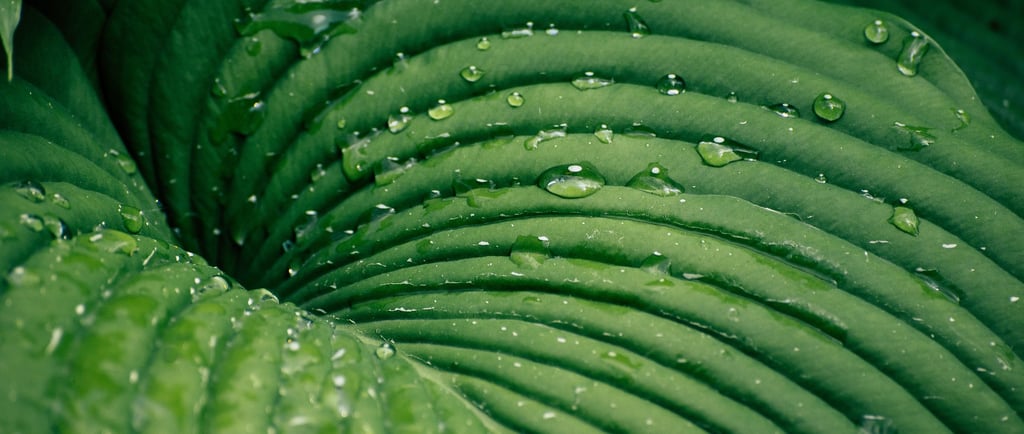
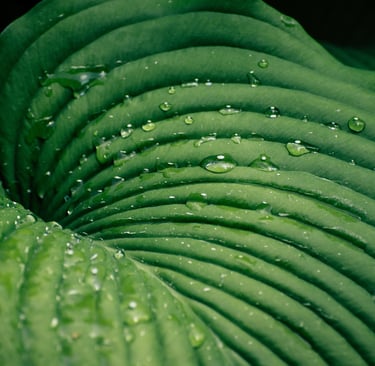
When it’s raining. 🌧️💧 Тhe leaves catch the drops like little umbrellas ☔. But instead of keeping the water away, they guide it down — drip, drip, drip — right to the spot where the roots are waiting.
It’s like the leaves are saying, “Here, friend, here’s your drink.” 🍃💧👂
On some plants, the leaves guide the rain like tiny drainpipes. Let’s look at this chart ( 📌 Chart G ) — see how the raindrops fall right down the leaf tips? It’s as if the leaves are holding little waterslides 💦. The rain doesn’t wander. It knows where to go — drip by drip, down the tip of the leaf, toward the waiting roots. 🪴 You might try this with a spider plant — pour water over it and see how the leaves guide it like a green gutter system!👉 Can you think of other plants that guide water down the tips like this? What about the plants in our classroom?
Look at this chart, ( 📌 Chart H ) the leaves are arranged like hands in a circle. Where does the water go? It gathers in the center… The leaves don’t just make food for the plant — they are teamwork tools. All of them gently nudge the rain down to the very center — right where the root wait. 👉 Which plants do you know with leaves shaped like this? Can you think of any herbs or vegetables we eat that hold water in their hearts? 🥬🌿🥗
Each plant has its own way. 🌺🌳 Some leaves drip water out wide — so the roots must spread out like a net 🕸️. Others send water down the stem — and the roots grow deep, like a finger reaching into the ground 🫳🪱.
Now imagine we can’t see the roots at all — they’re deep underground. But could the leaves be giving us a clue about where they’re growing? Let’s compare two types. ( Chart I ) 📌 Here the leaves send water out on the left — maybe the roots spread out too. And on this other plant on the right of the chart, the leaves drip water straight down the stem — the roots may grow straight down like a taproot. Can you think of real-life examples of each? 🧅🥕
And now, look at the whole shape of a plant — leaves, stem, trunk… all working together. 📌 Chart J – Woody and herbaceous stems help guide water. This tree on the left with strong bark and spreading branches probably has a wide root system. And here’s on the right a soft-stemmed plant — even that structure helps the water trickle to its roots.👉 Can you think of any trees or herbs you’ve seen that look like this?
Now we can see it — The whole plant — stem, leaf, root — is in on the plan 🤝🌱. It’s collaboration — say it and clap it: 👏Col-lab-o-ra-tion👏 — from Latin collaborare, meaning “to work together.”
It’s a partnership that has no meetings, no shouting, no fuss — just shapes and positions and quiet cooperation. 🌀🌧️🌿
💭 I wonder… Could we go outside and become leaf detectives? 🔍🍃 Could we look at the shape of a plant’s leaves and guess — Are the roots reaching wide like arms? Or deep like a tap root ? 🤔 Could we sketch the shape of a plant above the soil… and then imagine the root it needs below, to catch every raindrop falling from above? 🌧️🖍️🌱
With Montessori joy,
Vanina 😊