
The Vandals: Wanderers, Warriors, and the Famous Sack of Rome 🌍⚔️🏛️
🌍⚔️🏛️ A follow-up story that branches from the History Chapter Cultures and Civilizations and connects with the Migration Chapter, inviting children to explore a group of people famous for the Sack of Rome. ✨ It opens a doorway from the History Question Charts into the life of one moving society: a people who crossed borders 🌲🏔️🌊, followed routes, searched for safety, land, food, and belonging ❤️, met other groups, traded goods, fought battles, settled new lands, followed leaders 👑, and left behind a name that still echoes in the word vandalism 🧱💥. This story connects invisibly to the questions children meet in the History Question Charts and to the great human movement explored through migration: Why do people leave one place? What do they carry with them? What do they leave behind? 🌍👣 From here, children can branch into the Fundamental Needs Charts, migration stories 🧭, timelines, other civilisations, Mediterranean trade 🌊⛵, maps of Europe and North Africa 🗺️, food and farming, ships, laws, kings, family life, language, religion, and the changing meanings of words 📖✨. The story invites children to wonder: Were the Vandals only destroyers, or were they also traders, farmers, sailors, rulers, families, and children? What happened to them after their kingdom ended? Who came after them? Did they disappear, or did they blend into other communities? Can we discover more about how they lived, what they believed, what they traded, and why their name kept traveling through time? 🌱💭
HISTORY STORIES
6/1/20266 min read
Have you ever heard someone say, “That is vandalism”? 🧱💥Maybe a freshly painted wall was covered with graffiti, or something new and beautiful was damaged. You might even have seen a sign saying, "No Vandalism!" Hidden inside that word is the name of a real group of people.Their name was the Vandals. 👏Let’s clap it: Van-dals 👏 Vandals were not a group of people making graffiti around the city!
You have heard stories of the Romans 🏛️, the Greeks 🏺, the Incas ⛰️, the Maya, the Olmec, and many more peoples and civilizations. Each group had land, food, homes, leaders, language, beliefs, and unique traditions. But the Vandals were not so different from those civilizations we have explored with the History Question Charts.
The Vandals have an interesting story too — a story of movement, sea journeys, power, and a name that kept traveling long after their kingdom was gone. 🌍⛵📖✨
But who were the Vandals and where did they come from? And how do we even know about them ? We know partly because Roman writers began mentioning peoples called Vandili or Vandals in the 1st century CE, almost 2,000 years ago. But those writers were looking at people from outside their own Roman world. They left us clues, but not the whole story. The Vandals did not leave us many books in their own words, and their own language, Vandalic, later disappeared. 👣🌬️
The Vandals were one of the Germanic peoples of Europe, and their early homeland with parts of central Europe, especially lands near the Oder and Vistula rivers, around the region of today’s Poland and nearby areas. Later they moved across Europe, into Roman lands, into Spain, across the sea, and into North Africa. ( You can trace their path on the atlas. )🧵🗺️
These were not people living in one giant city. Many lived closer to the land: farming, herding, making tools, preparing food, caring for animals, and watching the sky and seasons. 🌾🐐🔥 When they moved, they did not travel with empty hands. They traveled with wagons and carts creaking along muddy paths 🛞, pulled by oxen or horses 🐂🐎. Families carried all their belongings with them, cooking pots, blankets, tools, weapons, sacks of grain, leather bags, jewelry, and perhaps seeds.
Domesticated animals walked with them too: cattle, sheep, goats, pigs, horses, and dogs. 🐄🐑🐐🐖🐕 If you were living back then, what would you carry? Maybe not plastic toys — but perhaps a small handmade object, a tool, a pouch, a carved animal, or something useful made by your own hands. Children in your age wake before the sun is fully up. No alarm, no need to rush for school. But your hands were needed. You were an important helper in the family and the community. Your hands will be always busy with something, you will be carrying water 💧. Or gather firewood 🪵. Or watch the horses 🐑. Or help grind grain into flour for bread 🌾🥣.
The Vandals did not have schools like ours, but learning was everywhere. Children learned by watching, listening, copying, helping, and remembering. They watched wool become thread. 🧵
They watched metal glow in the fire . 🔥⚒️ They watched a blade being sharpened. ⚔️
They watched an animal being tamed. 🐐 And they grew up knowing that their people were moving. 🧭🌍 Sometimes people move because they are searching for better land. 🌱 Sometimes because another group is pushing them. ⚔️ Sometimes because leaders of the group make a decision. 👑 Sometimes because staying has become too difficult..and there's no enough food for everyone.
The Vandals lived during a time when many peoples were moving, and the Roman Empire was becoming weaker. But they did not travel through empty lands. Everywhere they went, other people already had homes, fields, languages, roads, markets, and cultures. 🏘️🌾🛤️🗣️ So they met other groups again and again.
Sometimes they may have traded. 🤝 What might they have traded? Perhaps animals that they domesticated 🐐, hides and leather, wool 🧶, grain 🌾, tools, weapons ⚔️, metal objects, jewelry, salt 🧂, wine, oil 🫒, cloth, and even news. News was precious. A person who knew which road was safe, where food could be found, or which city was weak carried a treasure that could not be held in the hand. 🗣️✨
The Vandals were not helpless wanderers. They had farmers, herders, builders, craftspeople, and warriors. They used wood, bone, leather, wool, clay, and metal. A metalworker was important. Imagine the glow of the fire, the sound of hammering, and a child watching sparks jump like tiny stars. ✨⚒️
They did not leave us selfies or photographs, so we cannot know exactly how every Vandal looked. 📸❌ But from the time they lived in, from Roman writings, and from objects found by archaeologists, we can imagine some things carefully. Many may have worn tunics, cloaks, belts, leather handmade shoes, woollen cloth, and brooches to fasten garments. 🧥🧵🥾
A cloak was not just beautiful — it could keep you warm, become a blanket, and show importance. Warriors carried shields, spears, swords, or knives. 🛡️⚔️ Some people wore jewelry or decorated buckles. A leader’s clothing, weapons, horse, and followers could all say, “This person has power.” 👑🐎
Then came a powerful leader who ruled nearly 50 years and was known as a clever and patient king. He understood something very important: land gives power, but so does the sea. Under his rule the Vandals crossed into North Africa and made a kingdom there. ⛵🌊 They joined with another group called the Alans, so their kingdom became known as the Kingdom of the Vandals and Alans.
This was not just a group of wagons anymore. This was a kingdom — and it lasted almost 100 years. North Africa was one of the richest parts of the Roman world. There were grain fields 🌾, olive groves 🫒, ports ⚓, roads 🛤️, cities 🏙️, and ships ⛵. North Africa helped feed Rome. So whoever controlled those wheat fields controlled something very powerful: bread. 🍞
The Vandals were once a people moving with wagons and animals 🛞🐐, and then they became powerful enough to rule from coastal cities and send ships across the Mediterranean Sea. 🌊🛣️ Their ships could carry warriors, messengers, treasures, food, and news. Along the coasts, people may have wondered, “Are those trading ships… or Vandal ships?” 👀⛵
Across that blue Mediterranean road stood Rome. 🏛️Rome was not just any city. It was extraordinary — with roads of shaped stone stretching across lands, soldiers marching, markets full of goods from many places, temples, public baths, toilets, beautiful fountains, and mighty statues of Roman emperors standing like stone watchers over the people. To many, Rome seemed like a city nobody could conquer.
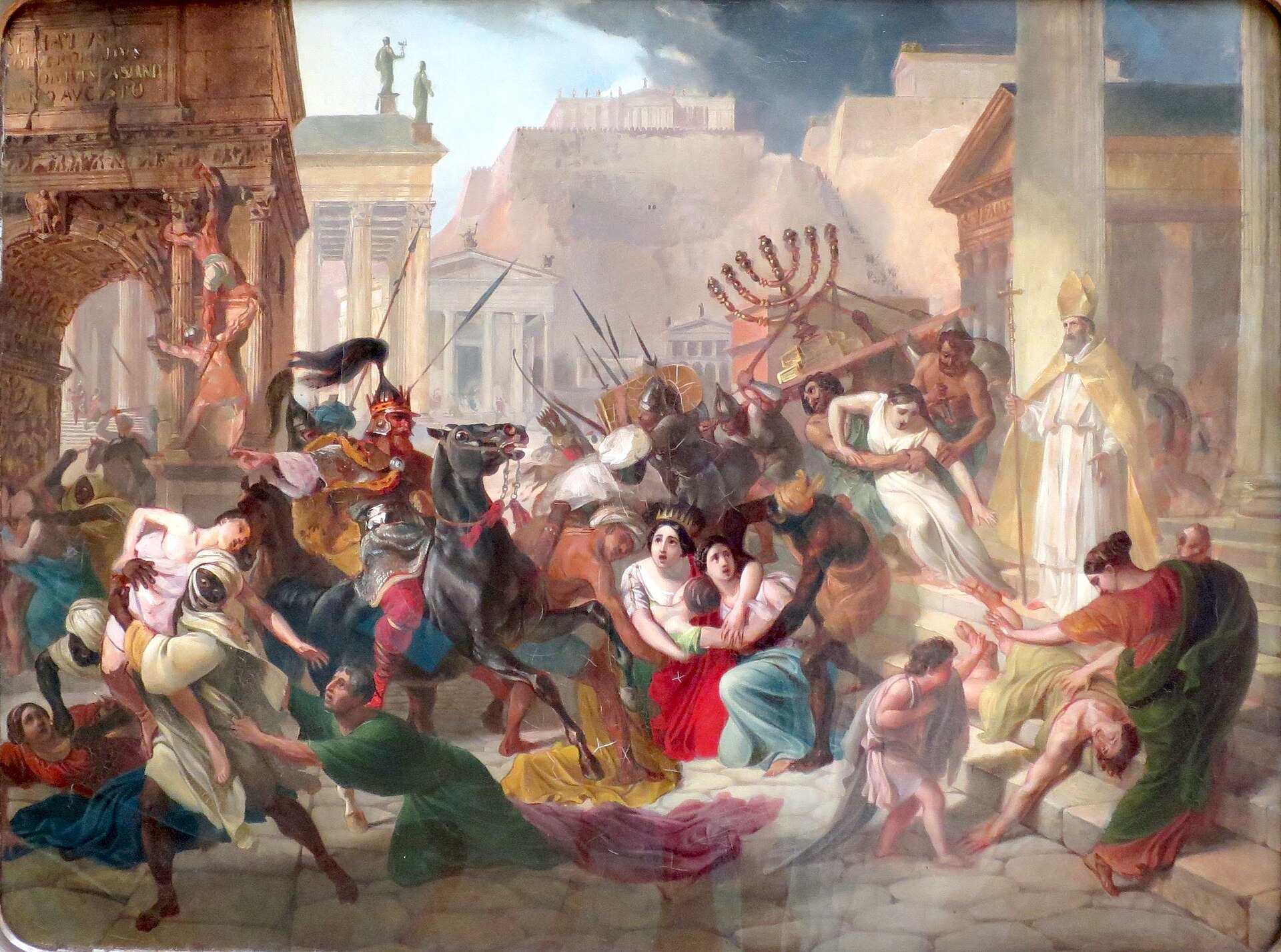
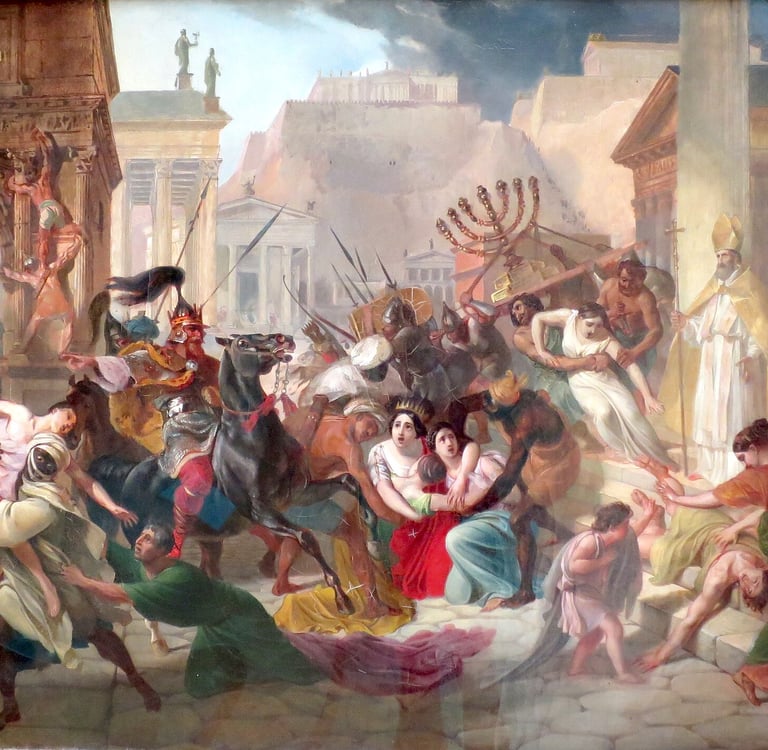
But then, in 455 CE, Vandal ships sailed across the blue sea toward Rome. 🌊⛵Not to trade, not to move there, not to build homes. But to take treasures, frighten the people, and show their power. This became famous as the Sack of Rome. To sack a city means to enter it during war and carry away valuable things. It may include stealing, damage, fear, and taking captives.
And oh! what a story people told afterward! 📣“Did you hear? The Vandals entered Rome!”
“The great city of Rome?” “Yes — Rome!”People remembered that moment. The story traveled from person to person, from place to place, and from century to century. Their name became connected with destruction. Later, people began using the word vandalism to mean damaging or destroying something on purpose.But were the Vandals only destroyers? 🤔
I wonder...💭 What happened to the Vandals? 🌬️Their kingdom ended when another powerful group conquered North Africa. But who were these people? And did every Vandal suddenly vanish? Did they blend with people more powerful than themselves, learn new languages and adopt new traditions? 🌍🤝
Now you can choose one History Question Chart, choose a question, and research the Vandals further:🌱💭
From The Nature of the Country 🌍:
What were the soil and climate like? What were the flora and fauna like? What kinds of land and water forms were there? What people lived there, and how did they come?
From The Practical Activities of the People 🔥⚒️:
What natural resources were found there, and how did people use them? What tools and techniques did they have? How did they satisfy their physical needs for food, clothing, shelter, transport, and defence? What did they produce, and what types of work were there?
From The Intellectual and Spiritual Aspects of the Culture 🗣️🕯️:
What language or languages did they speak? Did they have a written language? What was education like? What were their religious beliefs? How did they decorate themselves?
From Relations within the Group and with Other Groups 👑🤝⚔️:
Who had power in the society? How were they governed? Did they trade with others? What was childhood like? What about travel and migration? Did they conquer other peoples? Were they themselves conquered by anyone?
And here are two big questions to research further ?
What type of migration best describes the Vandals?
With Montessori joy,
Vanina 😊