
Types of Flowers🌸The Secret Ways Flowers Stand 🌷🌺✨
🌸✨ A follow-up story that branches from Chapter The Flower, in the Biology Album 📖🌷🌺✨ It encourages children to notice the secret ways flowers stand on the plant—solitary, terminal, axillary, or in an inflorescence 🌼🌿🔍—and to discover that these are not just naming words, but clues to the many flower experiments 🧪🌸 and the many clever ways flowers attract attention, survive, and reproduce 🐝🦋🐞🌬️✨ The Secret Ways Flowers Stand quietly prepares the child for later connections 🌱🔗: observing types of flowers can lead to noticing patterns of stamens and corollas 👀, and to exploring the many strategies 🎭flowers use to live and continue their story. 🌬️ This story invites children to go out, notice, observe carefully, and wonder… 💭Can a terminal flower be solitary? Can an inflorescence be terminal? Are the corollas of solitary flowers bigger than the flowers in an inflorescence? 🌺🔍🌼
BIOLOGY STORIES
4/8/20264 min read
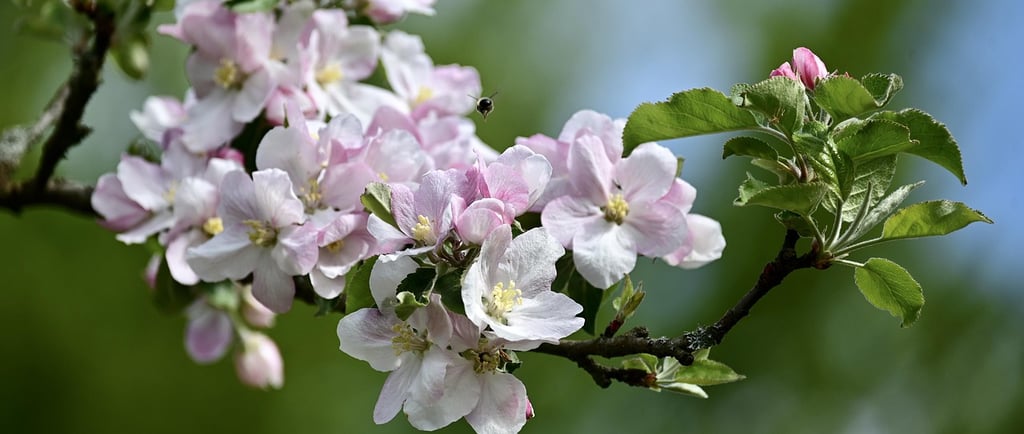
Today I want to show you something very curious 👀✨
When we look at flowers, we notice different things. We notice the colours, the bright corollas, the different shapes, and the arrangement of the petals 🌸💛💜🤍We notice if a flower is tiny or huge 🤏🌻 We notice the smell too👃 Some smell pleasant, almost like honey 🍯 Others… well… not quite so lovely 😅 sometimes more like pee or poo 💩
But people who study plants noticed something curious too 🔍🌿 They asked an important question: Where does the flower grow on the plant? 🤔
And then they discovered that flowers do not all choose the same place to stand 🌱🌷 Some flowers seem to say, “Look at me! I want my very own place!” 😄🌸 These are called solitary flowers. Let’s clap it: sol-i-tar-y 👏👏👏👏 Solitary comes from the Latin word solus, which means alone 👤🌷 A solitary flower grows one by one, not in a crowd. It stands by itself, as if it is saying, “I can do this on my own!” 💪😊 📣🌸Look at this daffodil 🌼Notice how there is one flower standing on its own.It is not in a bunch with many others. 👀✨And look carefully at its corolla. Do you see how bright it is? Notice the arrangement of the petals. And look in the middle — it almost has a part that looks like a little tube or trumpet 🎺 What a clever way to guide the pollinators!
And that flower stands on its own stalk. That stalk has a special name: peduncle. Let’s clap it: pe-dun-cle 👏👏👏🌿 it comes from the Latin word pedunculus, which means little foot 🦶Just like the petiole is like the leaf’s little foot, the peduncle is like the flower’s little foot.You can think of it as the flower’s little standing stick or its own special flower handle 🌸🎈
But scientists looked even more carefully 👀🔎 They asked another question: Exactly where on the plant does the flower appear? 🌱🤔And they found more patterns. Sometimes a flower grows right at the end of a branch, almost like the branch stretched out its arm and put a flower on its fingertip 🌿👉🌸✨These are called terminal flowers. Let's clap it : ter-mi-nal 👏👏👏 It means they are at the end 🔚🌸 So if you see a flower right at the tip of a stem or branch, you can say,“Ah! That one is terminal.” 😊 Look at this trillium. Its flower is lifted right at the top, easy to see.It is right at the end, like it has climbed onto a little stage so everyone can notice it 🎭✨
But some flowers do not grow at the end. They grow at a little meeting place on the plant, called a node, where the leaf grows.🍃🌿 That little joining place on the stem, is called an axil. Let's clap it:ax-il👏👏 So flowers that grow there are called axillary flowers 🌸🍃 The name comes from the latin word axilla, meaning armpit. 😄Some flowers grows from this node between the stem and the leaf, other grow on the armpit instead of the leaf., but they are all the armpit that forms between the stem and the leaf. So an axillary flower grows in the plant’s little leafy corner 🌿🌸😊 Look at this hibiscus 🌺 Do you see how the flower is not at the very end of the whole branch? It is tucked into that leafy corner, growing from the side where the leaf grows on the stem.
But some flowers make a very different choice 🌼🌼🌼 They do not grow alone. They grow together 🤝🌸🌸 Almost as if they are shouting:"Team work, makes a dream work!" Lots of them gather on one main axis, almost like a flower party 🎉🌼🌸🌺This is called an inflorescence. That word comes from Latin inflorescere, which means to be covered with flowers 🌸🌸🌸Look at lilac 💜Do you notice that there are many flowers gathered together? Not one flower standing all alone, but a whole group. Imagine the plant saying, “I am so full of flowers, I am covered with them!” 😍🌿 “My advertising team is really big!” 📣🌼🌼🌼 And there are also different types of inflorescence, but that is a story for another day… 😊📖
So now we know one way scientists organize flowers when they look at them 💡
Flowers are not only different in colour, shape, or smell 🌈👃🔍 They are also arranged in different ways. And when we know this, the way we see flowers change. ✨ A walk outside is no longer just a walk past flowers 🚶♀️🚶♂️🌸 It becomes a treasure hunt for patterns 🗺️🔍🌼
We begin to notice flowers that stand proudly by themselves, almost saying, “Solitary flower here!” 🌷✨ We notice others blooming right at the very end of a stem or branch, whispering, “Terminal flower here!” 🌿🌸 We spot flowers tucked beside a leaf, as if calling out,“Axillary flower here!” 🍃🌸
And we see whole bouquets gathered together in groups, joyfully announcing,“Team Inflorescence flowers here !” 🌼🌼🌼🎉
Scientists are careful observers 👀🔍 They do not rush 🚫🏃 They discovered these different arrangements of flowers by looking closely 👀 Comparing 🔍Wondering 🤔 And naming 🏷️ They have noticed that sometimes one flower can fit more than one describing word. That is why we must look very carefully before we name what we see 🌿🌸
So now let us become flower detectives 🕵️♀️🕵️♂️🔎🌼 Let’s go outside and explore the types of flowers we can find on our way 🚶♀️🌿🚶♂️🌸
I wonder… what types of flowers will we discover? 🤔✨Let’s collect specimens and see into how many groups we can organise them. Can we find terminal inflorescence ? 🌿🚩🌸Can we find a flower that is both axillary and solitary? 🌺 Take the nomenclature booklet f-11 and let’s go outside! 👣🌼✨
With Montessori joy,
Vanina 😊