
🪶🖋️📜A Doorway to Calligraphy ✨🚪✍️The Art of Illuminated Letters 📖
🌳 A follow-up story connecting the chapter “History of Written Language” in the Language Album and opening naturally into the work of Calligraphy in the chapter “The Hand and Writing, from Metal Insets to Calligraphy.” ✨ Branching even further into History, Geometry, and Art, this story invites children to revisit the story of human beings who made their thoughts visible through signs, symbols, alphabets, books, and beautifully written pages that could travel across space 🌍 and time ⏳. By following the golden thread of language, children discover another doorway leading to calligraphy 🪶🖋️📜, where illuminated letters become a sparkling journey of pigments, patience, line, shape, contrast, proportion, and technique. 🎨🔷✨ This is more than a language story; it is an invitation to continue the tradition of shaping letters with care and imagination while wondering: What pigments did scribes and monks use to make letters shine? 🌿💎 Did illuminators use real gold to make their letters shine?🕯️ 🌟 What contrasting colours could make my illuminated letter stand out? 🎨 Can we still find books with illuminated letters today? 📚 Could my letter hide an animal, a plant, a pattern, or a tiny story inside it? 🐉🌿
LANGUAGEART STORIES
5/12/20264 min read
Do you remember the story of written language? We saw that human beings had a marvelous problem: their words disappeared into the air. 🗣️💨 So they began to make signs and symbols. They pressed marks into clay, drew pictures, shaped alphabets, and slowly discovered how to make their thoughts visible. 📜✍️ A thought could now travel across space and wait across time.⏳🌍
But human beings did not stop there. They began to wonder: Can writing do more than carry a message? Can writing also be beautiful? ✨ Today we will follow the golden thread of written language to a special doorway called calligraphy. ✍️✨Let’s clap that word: cal-lig-ra-phy 👏 👏 👏 👏 The word calligraphy comes from two Greek words: kallos, meaning beauty, and graphein, meaning to write. So calligraphy means beautiful writing. ✨🖋️
And inside this room of beautiful writing, there is a very special treasure waiting for us: a way of shaping letters so carefully, so colourfully, and so imaginatively that one letter could become almost like a tiny world. 🌍🌟 These are called illuminated letters.
The word illuminate comes from the Latin word lumen, meaning light. 💡
So an illuminated letter is a letter that has been lit up—with colour, pattern, pictures, and sometimes even real gold. 🌟📜 Imagine opening a book long, long ago. There were no printers, no photocopiers, no typing, and no keyboards. ⌨️ Every book was made by hand and every page had to be written by hand.
But even before the writing could begin, the book had to be prepared. 📖 The pages had to be made ready. Sometimes they were made from parchment or vellum. Parchment was usually made from sheep or goat skin, while vellum was a finer, smoother kind, often made from calf skin. Books made from vellum were considered especially precious — even luxury books. ✨ The skins had to be cleaned, stretched, scraped, dried, smoothed, and cut before they could become pages for a book.The page then had to be measured. Lines might be ruled so the writing would march neatly across the page. 📏
The ink also had to be prepared. It was not bought from a shop nearby. Some black ink was made from soot or charcoal mixed with some oils or other liquits. Another famous kind of ink, called iron gall ink, was made from a little round growths found on oak trees, but this is a story for another day.🌳🖤 Just imagine the prescision and the care! One book was not only a book. It was the work of many hands, many hours, and sometimes many months. ✋⏳This was very slow work.
The the scribe carefully copied the words, letter by letter, line by line, page by page, dipping a pen into ink again and again. 🪶🖋️ Every book was hours and hours of dedication, and these books were very important. They might hold prayers, laws, poems, songs, stories, maps, or knowledge that people wanted to protect and pass on. 📖⏳
So human beings began to ask another question: If these words are precious, how can the page show that? How can the beginning of something important invite the reader in? How can a letter become more than a sign? ✨
Then another artist, sometimes called an illuminator, came to bring light and beauty to the page. 🎨✨ And oh, what treasures the illuminator used! Some colours came from the Earth itself: stones, minerals, and clay ground into fine powder. 🪨💎 Some colours came from plants: roots, leaves, berries, and flowers. 🌿🍓🌸 Some deep reds and purples even came from tiny living creatures. 🐚🐞 The colours were mixed and prepared with great care, almost like a secret recipe.
Blue could be especially precious. A brilliant blue pigment was once made from a stone called the stone of the kings, lapis lazuli, which had to travel from faraway mountains. 💙⛰️ Imagine a colour so special that it had already taken a journey before it ever touched the page!
And then there was gold. 🌟 Sometimes illuminators used real gold, beaten into sheets so thin and delicate they were called gold leaf. The gold could be placed carefully onto the letter. When candlelight touched it, the page shimmered. 🕯️✨ It was as if the letter had caught a little piece of the sun. ☀️
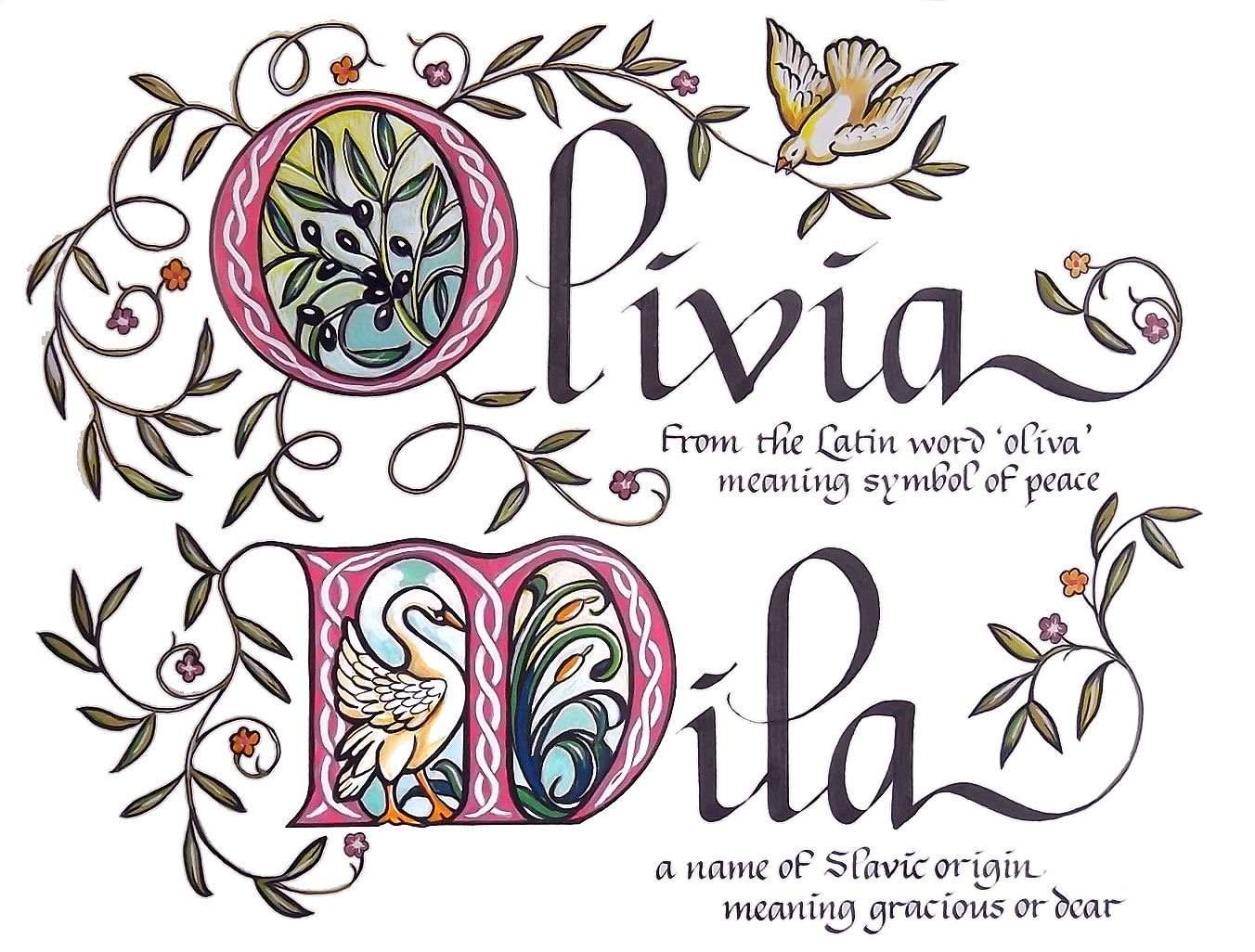
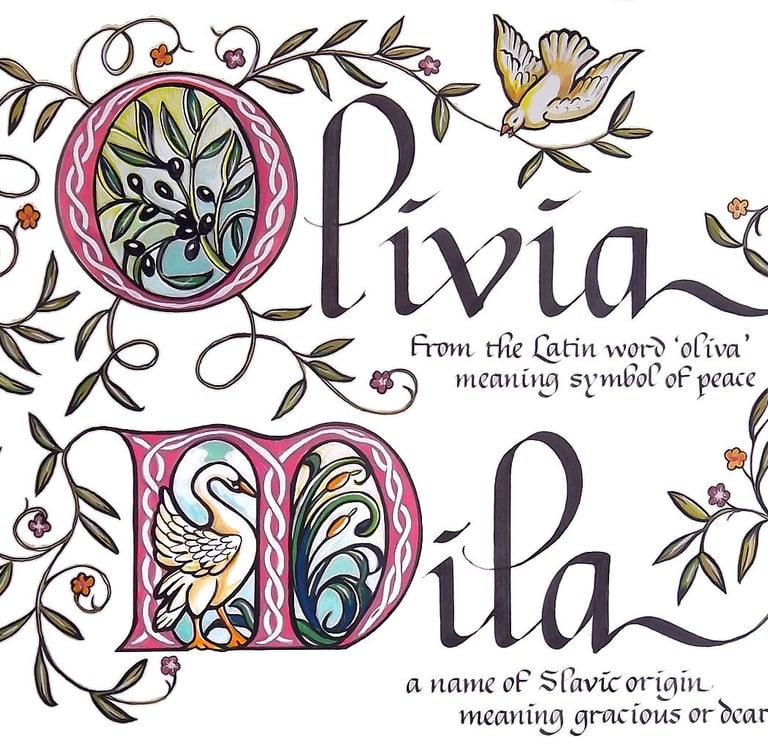
The illuminator might make the first letter very large. But this was not just any large letter. This letter might be filled with curling vines 🌿, tiny flowers 🌸, birds 🐦, animals 🐇, stars ⭐, patterns 🔷, or even a dragon hiding in the curves. 🐉
The illuminated letter seemed to say: “Look closely. 👀 Something important is beginning. 📖 ” 🚪✨
Let’s look at a few examples and see what the illuminators wanted our eyes to notice first. 👀✨ Do you see the large first letter? Do you see gold catching the light? Do you notice vines, borders, animals, patterns, lines, or tiny scenes? Can you see how sometimes an illuminated letter is decorated in such a way that it feels like a window into another world? 🚪🌟 Look closely at the details around the page — the borders, the careful lines, the colours, and the shapes. Which part calls for your attention first? Which part makes your eye stop and wonder? 📜🌿🌟 Example 2, Example 3, Example 4
And now, perhaps, you would like to create your own illuminated letter. You may choose one letter — maybe the first letter of your name — and make it large. Then you might fill it with contrasting colours 🌈, patterns, plants, animals, shapes, or other interesting details that tell a story. One letter, when illuminated, can become a letter full of meaning. 🎨🌿🐉✨
You may explore the material “Illuminations: A Lesson in the Art of Illuminated Letters,” which shows how illuminated letters were enlarged, decorated, coloured, and sometimes touched with gold leaf so they could reflect light and appear to glow. It also describes the work of the many hands behind one beautiful page. 📜🪶✨
As you work, you might wonder and research later:
What pigments did illuminators use to make their colours? 🎨🌿
What was the most expensive pigment, and why did some colours have to travel from faraway places? 💙⛰️
Was it really gold shining on the page, and how did gold leaf catch the candlelight? 🌟🕯️📜
Who prepared the parchment before the writing began? 🐑📖
How did the scribe leave space for the illuminated letter? ✍️📏
Where we can find books made from parchment paper or veil with illuminated letters today? 📚
Note for the Storyteller. After hearing the story of illuminated letters, children may use this book to explore beautiful writing further — practicing strokes, choosing a favourite style, making name cards, decorating titles, or creating their own calligraphy charts. ✨📜
With Montessori joy,
Vanina 😊