
KINDS OF ARTHROPODS 🕷️🦀Jointed-Leg Superstars🔗⭐
🕷️🚪 A follow-up story that branches from Classification of Living Organisms and reaches back to Life on Earth and Zoology, Introducing the Animals in the Biology Album 🏛️🐾✨ It invites children to step back into the Animal Kingdom Gallery and then zoom into one of its busiest rooms—Arthropoda—to discover a secret museum-inside-the-museum: four inner doors (big family branches) that help the mind organize the “jointed-leg crowd” into clearer patterns 🔎🦵🛡️: Myriapoda as the many-legged land crawlers, Crustacea as the armored water-dwellers with gills and molting mysteries, Chelicerata as the no-antennae hunters with special mouth-tools , and Hexapoda as the six-legged champions that lead straight to the next story—Class: Insecta 🐜🦀🕷️🐞. When this is linked back to Life on Earth, the four doors feel like different solutions life tried as animals spread into new habitats—soil, shorelines, streams, and air—so the Timeline of Life becomes a living map of inventions rather than a strip of dates 🕰️🌊🌿. And when it connects to Zoology, Introducing the Animals, it naturally turns into real observation work: “How does it move? What does it eat? How does it protect itself? Where does it live?”—inviting children to go out with a magnifying glass, build their own cardboard Arthropod Gallery, or visit a natural history museum to hunt for each door’s clues 👀🔎📦. Best of all, this story quietly reveals the chapter’s hidden pathways: this four-door exploration prepares the child to zoom further into Kinds of Insects, widen out again to compare Kinds of Arthropods, and then step through the great threshold into Vertebrates—showing how classification is really a story of relationships, branching journeys, and endless discoveries 🧠✨
BIOLOGY STORIES
6/5/20264 min read
Following THE INVERTEBRATES Story
Do you remember our Animal Kingdom Gallery 🏛️🐾—where we opened six doors and discovered that each room was a phylum, and we used one “key creature” 🔑 to remember the whole room? Today we’re going to zoom in inside the Arthropoda room 🐜🕷️🦀—the room of jointed legs 🦵🔗 and strong outer “armor,” the exoskeleton 🛡️? This Arthropoda room is so busy that it has four smaller doors 🚪🚪🚪🚪. Behind each door is a different kind of arthropod—different lifestyle, different body-plan clues—but all still wearing that familiar arthropod “uniform”: segments + jointed legs + exoskeleton 🧩🦵🛡️.
We step forward and the first door swings open to a hallway that almost seems to stretch forever… because this is the door to the Myriapoda. Let’s clap it: MY-ri-a-PO-da 👏👏👏👏 , a name that means something like “ten thousand legs” 😄🦵🦵🦵. Our key creature here is the millipede. These arthropods have many legs to travel with, and they have one pair of antennae and simple eyes 👀📡. When you imagine the earliest animals beginning to explore land, myriapods feel like they could have been among the first brave crawlers to make that journey—close to the ground, step after step, many legs working together 🌿👣👣👣. And if this hallway feels endless like the millipede herself… just imagine this endless hallway is full with doors —different kinds of myriapods waiting someone brave to enter.🚪🖍️🔎
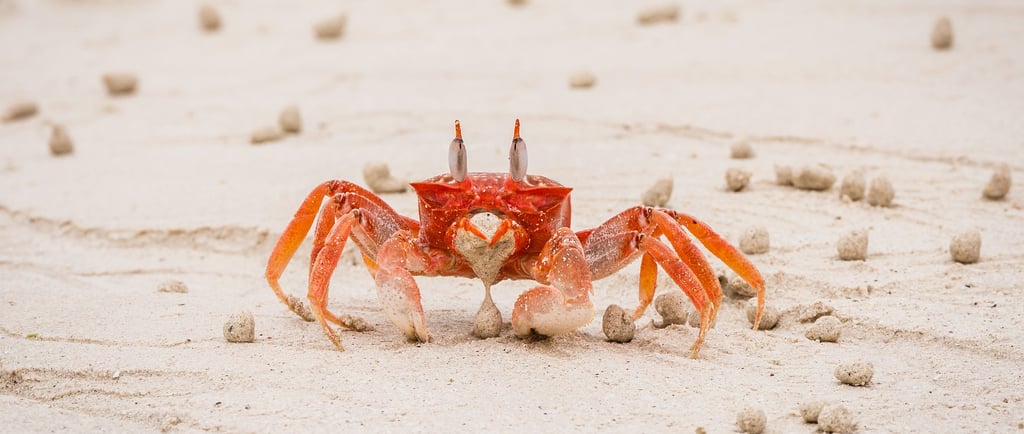
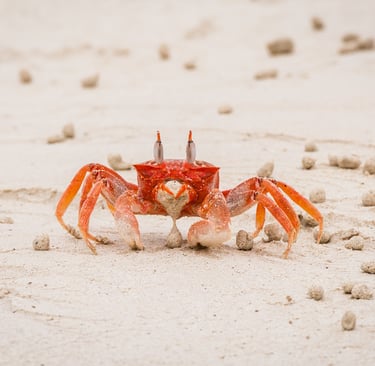
Now we open the second door and—splash!—we’re suddenly in the world of water 💧🦀. This door is Crustacea. Let’s clap it: Crus-TA-ce-a 👏👏👏👏.Those are the arthropods with hard shells 🛡️. The name comes from a Latin word meaning a crust —perfect for animals that feel armored. Our key creature is this cheerful crab. Most crustaceans live in water and breathe with gills 🌊🫁. Their bodies are divided into three main parts—head, thorax, and abdomen—but there comes a fascinating arthropod problem: how do you grow if your skeleton is on the outside squeezing you ? 🤔 Crustaceans solve it by molting—they have to take off, or shed the old shell to grow a new one 🧥➡️✨. And look closely at their limbs: the legs can seem like they come in two parts, like hinged tools built for gripping and moving 🦀🔧. Some male members of this group grows hudge claw, half size of it's body and use it to wave to females for some attention or also use it for self defence and protection againts bullies. This group is full of adventurous experiments living under water.
The third door feels different—quiet, mysterious… maybe even a little Halloween-ish 👀🎃🕸️. This is Chelicerata. Let’s clap it: Che-LIC-er-A-ta 👏👏👏👏. Think of this door as the “no antennae” experiments 🚫📡. When we step in, we meet our key creature: the garden spider 🕸️✨.The name of this group comes from Greek: chelé = “claw” 🦞kéras = “horn” 🦌 So chelicerae are like “claw-horns” . These are like their first mouth tools, right at the front of the face that help them grab and handle food 🕷️🍽️ 👄🔧Many arachnids have four pairs of legs—eight legs total 🦵🦵🦵🦵—and their bodies are often divided into two main parts. Most live on land, and many are predators 🏹🕷️. Some can spin webs—turning thread into trap, shelter, and masterpiece all at once 🕸️⭐.
And now we open the fourth door and the air suddenly feels busy—buzzing, fluttering, hopping 🪽✨. This door is Hexapoda, which literally means “six feet.” Let’s clap it: Hex-a-PO-da 👏👏👏. Our key creature here is the the hornet 🐝. Insects have six legs, often a three-part body, and one pair of antennae 📡. Many have wings, many have incredible eyes, and they are so successful that they appear everywhere on land—you can spot them without even leaving home🏠👀. And after we walk through the Hexapoda door, we can zoom in further and find one of the largest groups within Arthropoda: the door labeled Class: Insecta 🔎🐞.
But that’s a story for another day… 😉
Now we step back into the centre of the Animal Kingdom Gallery 🏛️🐾 and look how far we’ve travelled—exploring the Gallery of Invertibrates opening door after door and discovering six phyla. Each phylum is a huge group of animals that share the same main body plan 🧩.We met a representative in each room. And today we entered one of those phyla—the Arthropoda Gallery 🐜🕷️🦀—and discovered four more rooms inside it, sometimes called subphyla: sub means “under” or “a smaller part,” and phyla means “groups,” so these are smaller groups within a big group.
And those four inner doors led us to four big arthropod families, each with its own special way of living 🧠✨Many-legged crawlers on land like milipede proud representative of Myriapoda 🦵🌿, armored gill-breathers in water like the crab proud representative Crustacea 🦀🌊, watchful eight-legged hunters like the garden spider representing the Chelicerata 🕷️🕸️, and the six-legged champions of land and air being represented by the furious hornet member of the Hexapoda 🐞🪽. 🧠✨
Now I wonder...🔎✨Let’s play leg detective: which door is 6 legs, which is 8 legs, and which is many? 🦵🔢 Which door has the most species—Myriapoda, Crustacea, Chelicerata, or Hexapoda? 🏆🔎 Take a magnifying glass outside (or even indoors) and try to find one arthropod from each door? Or you can star building your Own “Arthropod Gallery” from cardbord.
Myriapoda Explorations🦵🌿 Do any millipedes reach 1,000 legs—or is that just a nickname? 😄🦵How long the longest millipede can grow—could it be longer than your hand? ✋🪱how fast a millipede moves compared to a centipede—who wins the race? 🏁🐛
Crustacea Expolorations 🦀🌊 How many types of members this family has? How many times a crab has to molt as it grows?🛡️➡️✨What is the largest crustacean (by leg span or weight)? 🍽️🦀 How long crustaceans can live—do some live for just a year, or for many years? ⏳🦐 Can we cut and dissect a crustacean? 🌊🛒
Chelicerata Exploraitons 🕷️🕸️ How many legs all chelicerates have—are they always eight, or are there surprises? 🦵🔢 How long a spider can take to build a web—minutes, hours, or all night? 🕸️⏱️ Do all members of this subphyla spin webs? How strong spider silk is—could a tiny thread hold a bird not just trap a flying insect? 🕸️💪🪰
Hexapoda Explorations 🐞🪽What members of the hexapoda do in the winter? How far can a small insect travel—can any migrate across countries? 🗺️🪽
With Montessori joy,
Vanina 😊